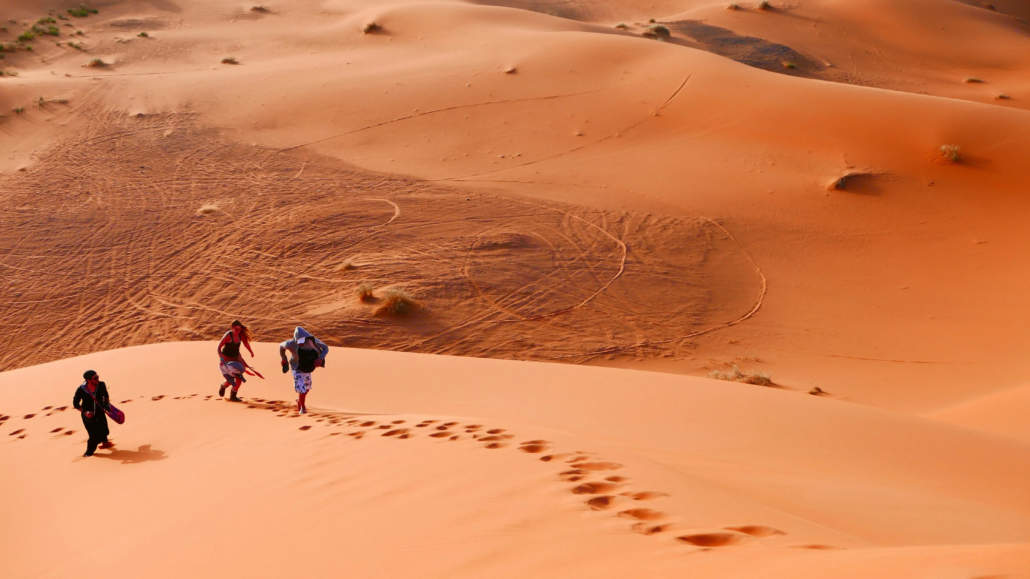
Moroccan Desert: Why Erg Chigaga Will Ruin Every Other Destination for You (In the Best Way)

The first time the Sahara swallowed me whole, I was standing barefoot on a dune the size of a small mountain, watching the sun melt into the horizon like spilled honey. No Wi-Fi. No noise. Just wind, sand, and the kind of silence that makes your chest ache in a beautiful way. If you’re even remotely curious about the Moroccan desert, stop whatever you’re doing — because this article is about to become your most-used browser tab.

What Exactly Is the Moroccan Desert — and Why Does It Matter?
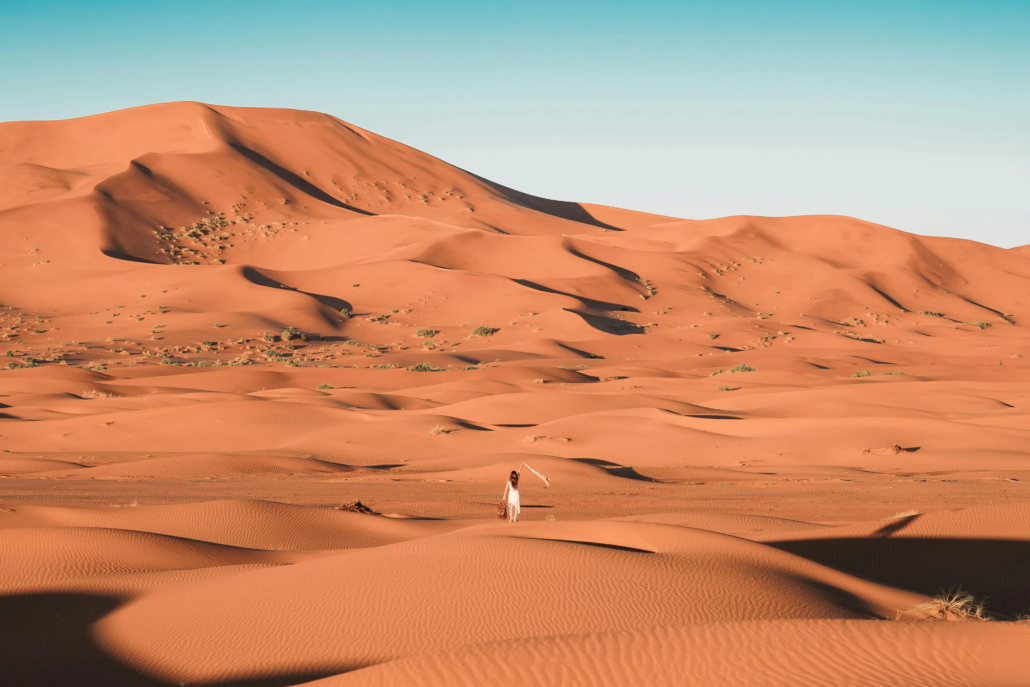
Morocco sits at the edge of the world’s greatest hot desert, the Sahara, and the country holds some of its most jaw-dropping corners. But here’s what most travel blogs won’t tell you: not all Moroccan deserts are created equal.

There are two main erg (sand sea) regions worth knowing:

Desert RegionDistance from MarrakechCrowd LevelVibe
Erg Chebbi (Merzouga)~560 kmModerate–HighClassic, accessible
Erg Chigaga~600 kmLowRemote, wild, untouched

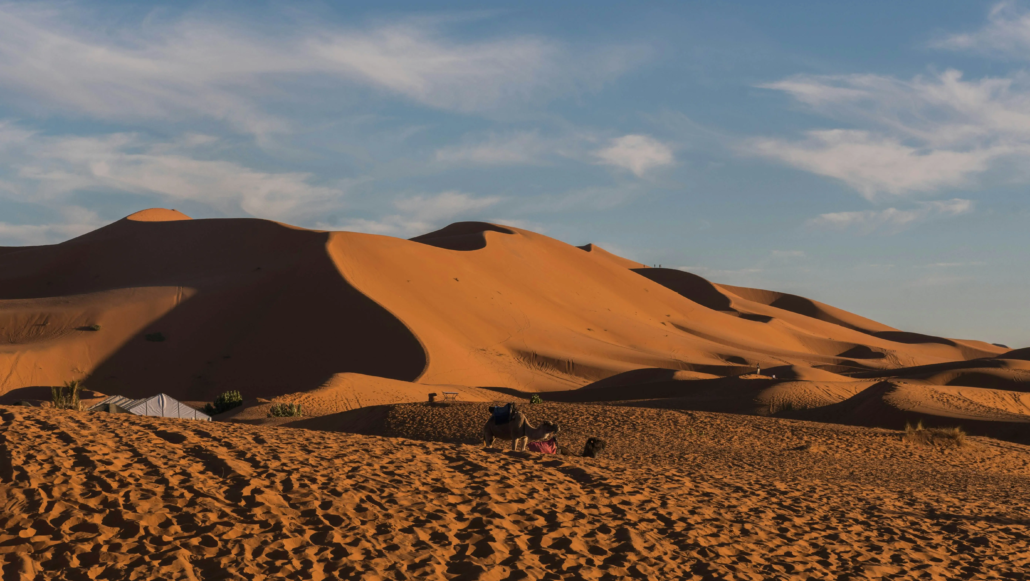
Erg Chigaga is the one that makes seasoned travelers go silent. It’s vast — nearly 40 km of uninterrupted dunes — and because it requires a 4×4 ride through piste tracks to reach, the crowds simply don’t bother showing up. That’s your advantage.

Why Erg Chigaga Is the Crown Jewel of the Moroccan Desert

Let’s be honest: you could spend a night in a budget tent, eat a lukewarm tagine, and tick “Sahara” off your list. Or — and hear me out — you could do it properly.

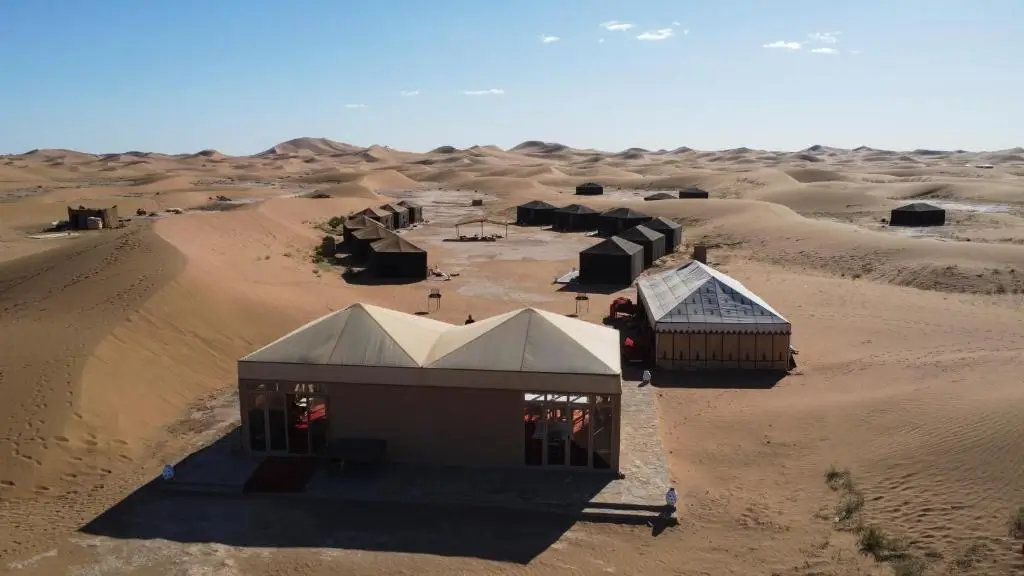
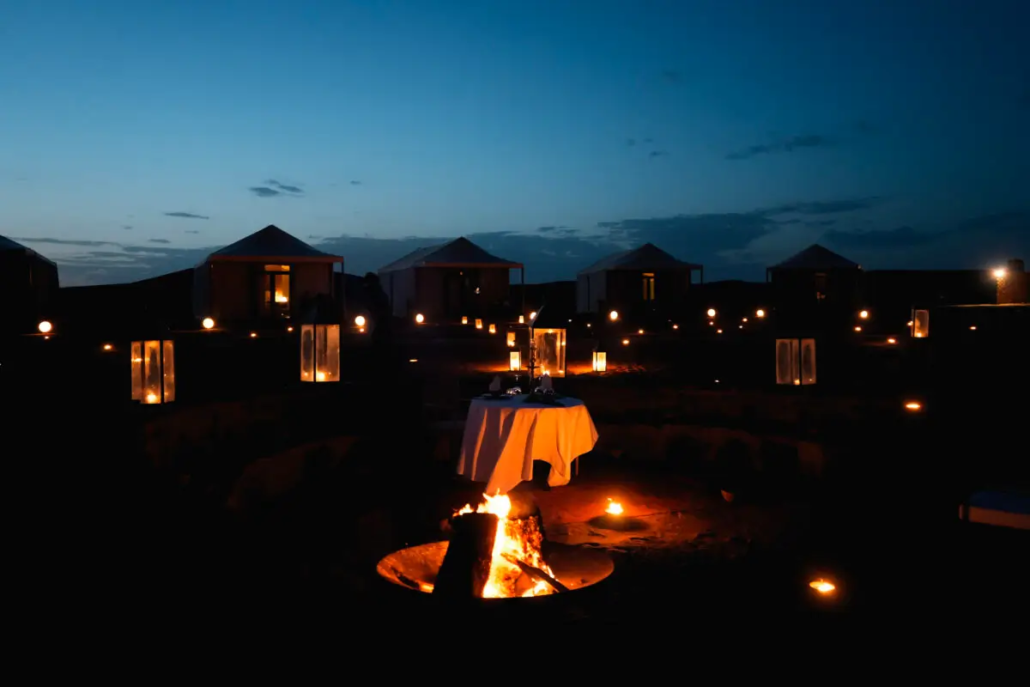
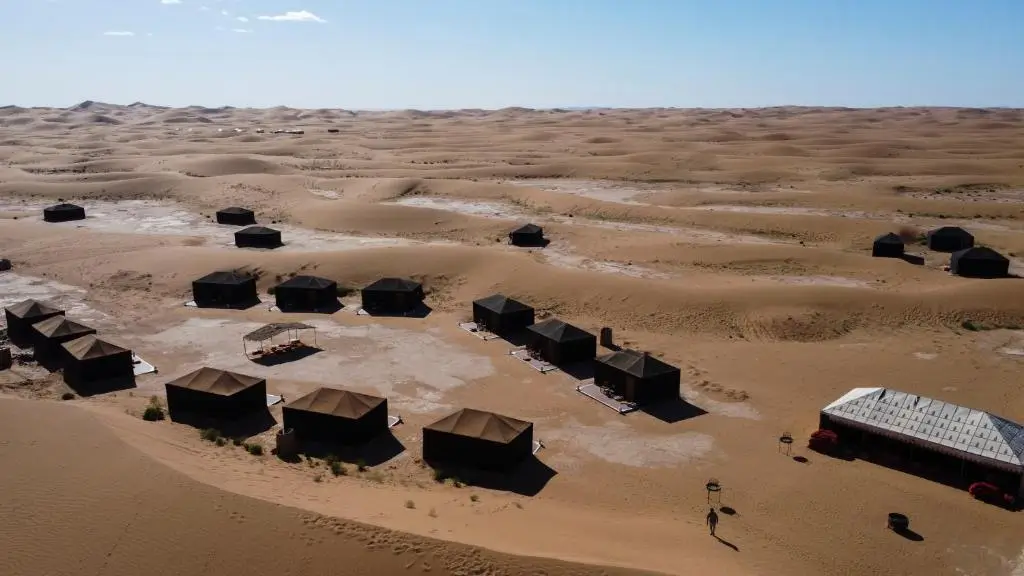
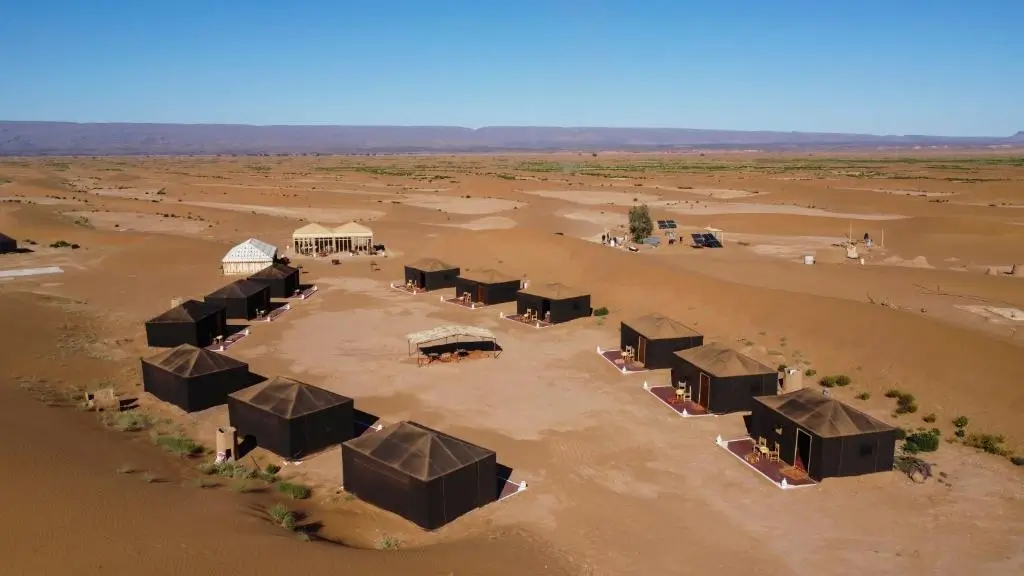
Ghazala Camp sits right in the heart of Erg Chigaga and is, without question, one of the finest luxury desert experiences in all of Morocco. We’re talking en-suite luxury tents, gourmet dining under a sky so full of stars it looks photoshopped, a rooftop terrace, and a swimming pool (yes, in the Sahara — it’s as surreal as it sounds).
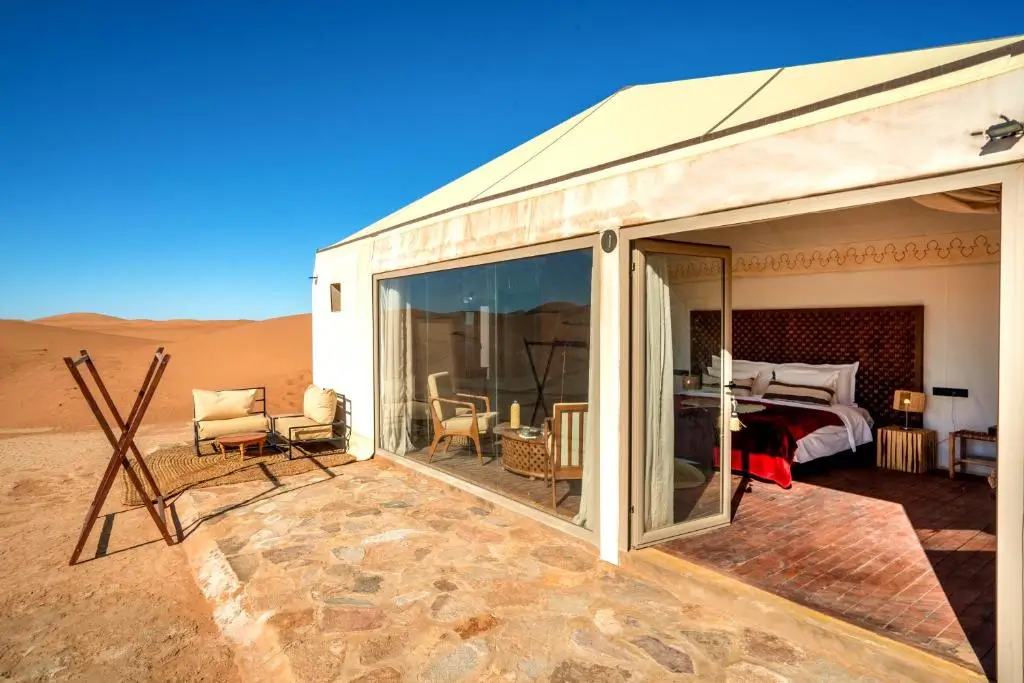
Ghazala Camp

“Staying at Ghazala felt less like camping and more like discovering a secret civilization hidden behind the dunes.” — a recent guest review

This isn’t glamping in the basic sense. It’s desert hospitality elevated to an art form.

The Erg Chigaga Experience: What Makes It Different
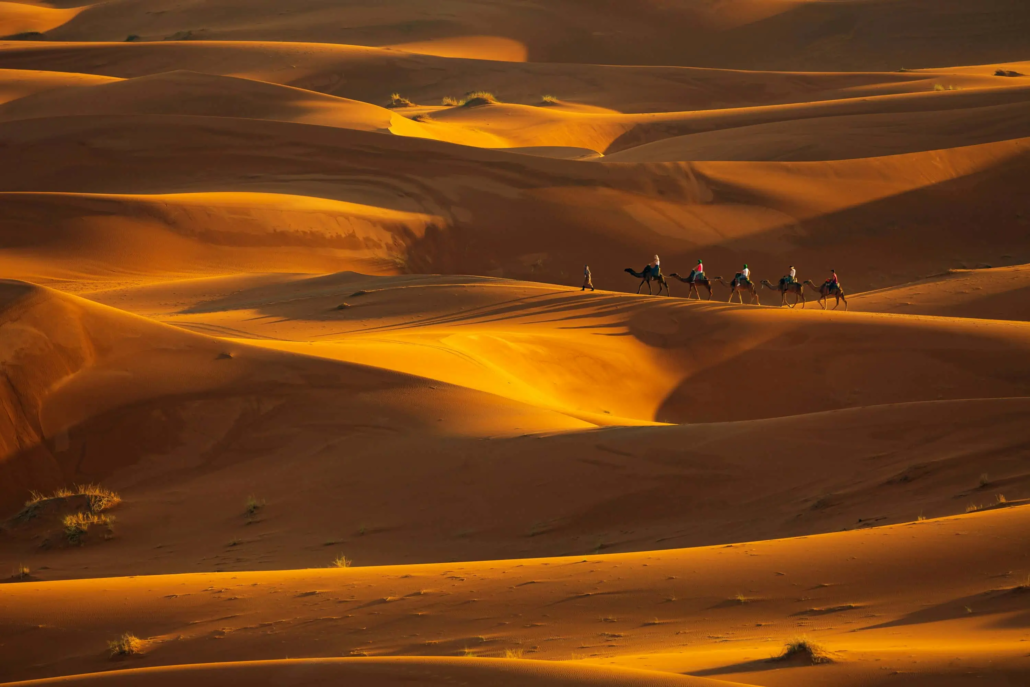
Here’s what a typical day at Ghazala Camp looks like — and trust me, “typical” feels like the wrong word entirely:

  • Dawn: Wake up before sunrise (yes, set that alarm — you’ll thank yourself). The light turns the dunes copper and rose.
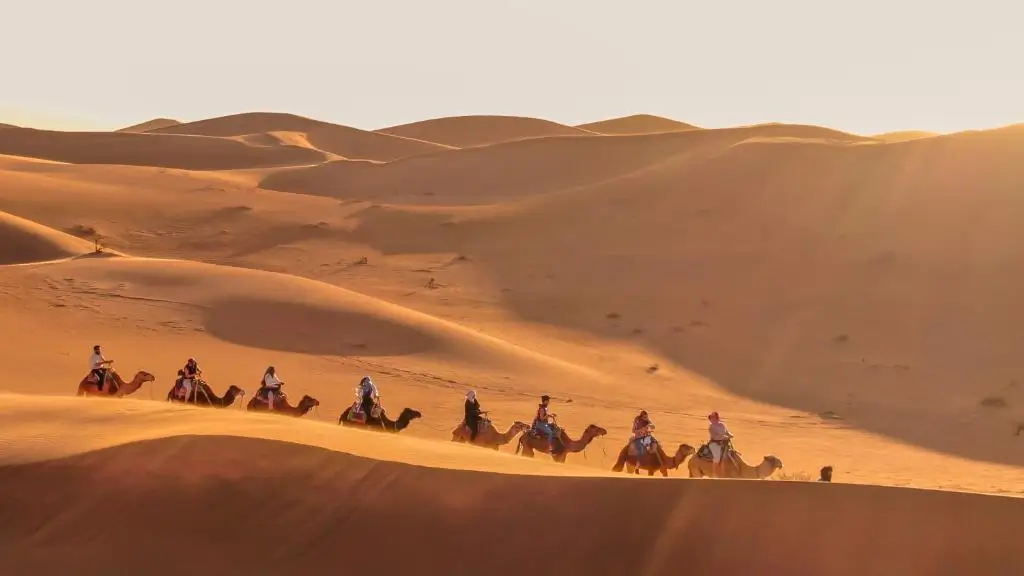
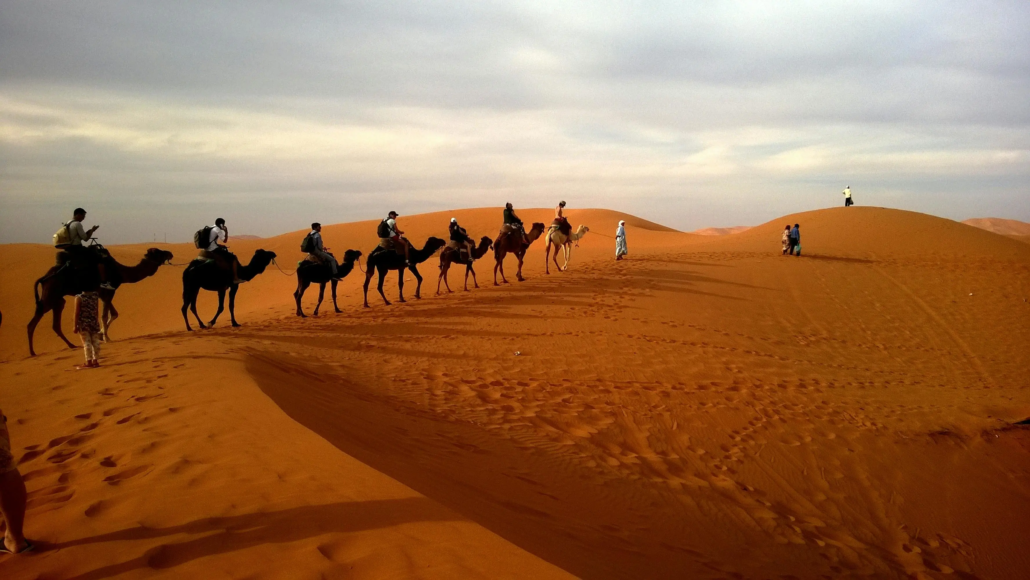
  • Morning: Camel trek into the silence. No roads, no noise, just the rhythmic sway and the odd camel opinion about the pace.
  • Afternoon: Sandboarding, quad biking, or simply lying in a tent doing absolutely nothing — which, in the desert, feels radical and necessary.
  • Evening: Sunset from the top of a dune with mint tea in hand. This moment alone justifies the entire trip.
  • Night: Stargazing in one of Africa’s darkest skies. The Milky Way isn’t a concept here — it’s a ceiling.

“There are places that are beautiful. Then there are places that are alive. Erg Chigaga is the second kind.”

Explore More of Morocco’s Desert Magic
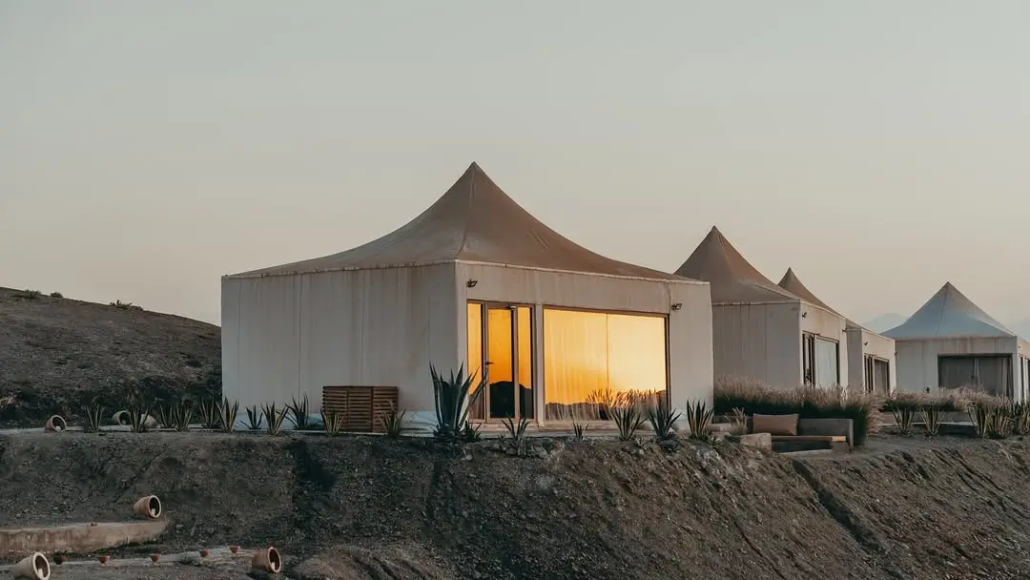
One of the smartest things you can do is combine desert regions into a single epic Moroccan road trip. Morocco’s infrastructure has improved dramatically, and linking these destinations is easier than you’d think.

If you’re heading toward the eastern Sahara, don’t miss the dunes of Merzouga — specifically The White Camel Acacia and Merzouga Luxury Desert Camps, two outstanding properties that share the same philosophy of authentic luxury without compromising on the wild desert soul.

And if you’re based in or near Marrakech? The Agafay Desert is a rocky, moonscape desert just 40 minutes from the medina — perfect for a night escape. The White Camel Agafay is hands-down the finest camp in the region, blending Atlas Mountain views with that same warm, refined hospitality.

Pro Tips Before You Go

📍 Local Secret: Erg Chigaga is best reached via M’Hamid El Ghizlane. Hire a local 4×4 guide from the village — they know every track, every dune, and exactly where the wind sculpts the most extraordinary formations.

Practical details you actually need:

  • Best season: October to April. Summer temperatures can exceed 45°C (113°F) — the desert is stunning year-round but survivable is a reasonable preference.
  • Getting there: Fly into Marrakech or Ouarzazate. From M’Hamid, it’s roughly 60 km by 4×4 (about 2 hours on piste).
  • Budget reality: A luxury desert camp like Ghazala runs approximately €150–€350 per night including dinner, breakfast, and activities — genuinely worth every dirham.
  • Solo travel: Completely safe, especially at established camps. Moroccan desert communities are welcoming and accustomed to international solo travelers.
  • What to pack: Lightweight layers, a warm jacket (desert nights are cold, even in spring), lip balm, quality sunscreen, and a camera with extra batteries.

Is the Moroccan Desert Safe? Let’s Address the Elephant in the Room

Short answer: yes, and confidently so.

Morocco consistently ranks among Africa’s safest tourist destinations. The desert regions — particularly around Erg Chigaga and Merzouga — are rural, peaceful, and deeply hospitable. Nomadic Berber culture places enormous value on guest welfare; you’ll feel it in every cup of tea offered, every hand extended to help.

Check the latest travel advisories from the UK Foreign Commonwealth & Development Office or your country’s equivalent for up-to-date guidance, but the overwhelming consensus from travelers is: Morocco delivers.


A Quick Word on Moroccan Desert Culture

The desert isn’t just a landscape — it’s a living culture. The Amazigh (Berber) people have called this land home for millennia, and experiencing their hospitality is as memorable as the dunes themselves.

A few cultural notes worth keeping in mind:

  • Dress modestly, especially in smaller villages surrounding the desert.
  • Accept tea when offered — refusing is considered impolite, and honestly, Moroccan mint tea is one of life’s great pleasures anyway.
  • Bargain respectfully in markets, but don’t grind sellers into the ground. Fair is fair.
  • Learn two words: Shukran (thank you) and Labas (how are you / I’m fine). Watch faces light up.

FAQ: Your Moroccan Desert Questions, Answered

Which is better for a first-timer — Merzouga or Erg Chigaga? Both are magical, but they offer different experiences. Merzouga (Erg Chebbi) is more accessible and has excellent camp options like Merzouga Luxury Desert Camps. Erg Chigaga is wilder, more remote, and far less visited — ideal if you want the Sahara mostly to yourself.

How many nights should I spend in the Moroccan desert? Two nights minimum. One night gives you a taste; two nights let you actually feel the desert. Three nights and you start renegotiating your life choices in the best possible way.

Can I visit the Moroccan desert without a tour? You can, but a guided experience significantly enriches it — especially for Erg Chigaga where navigation without local knowledge is genuinely challenging. Camps like Ghazala arrange everything seamlessly.

What food can I expect in the desert? Think slow-cooked lamb tagine, hand-rolled couscous, fresh Moroccan salads, harira soup, and fresh-baked msemen flatbread. At Ghazala, dining is a full sensory event — candlelit, under stars, with Gnawa music drifting through the warm night air.


The Moroccan Desert Doesn’t Wait — Neither Should You
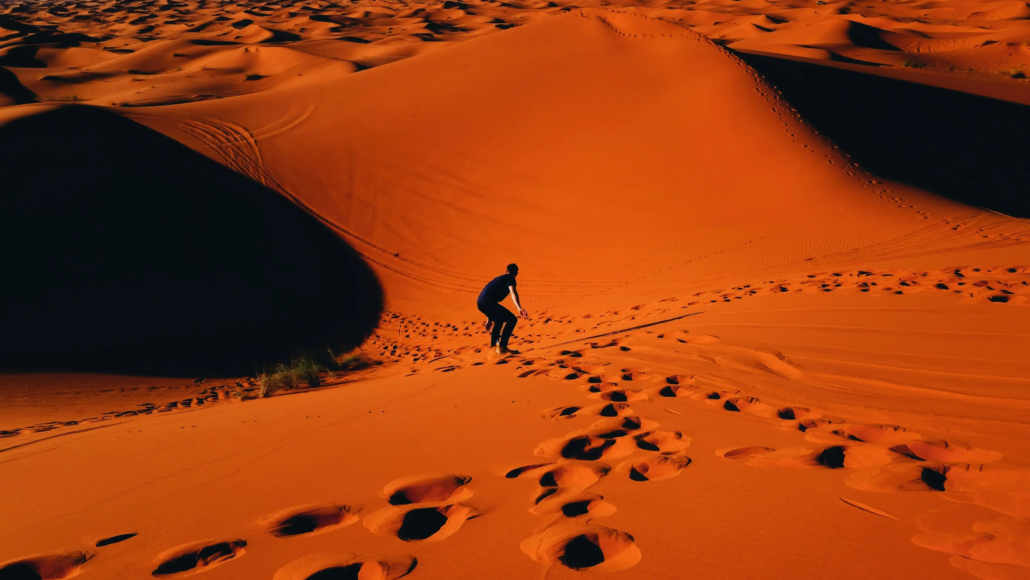
Here’s the thing about Erg Chigaga: it’s still, miraculously, under the radar. The crowds that have descended on other famous dune destinations haven’t fully discovered it yet. That window won’t stay open forever.

Whether you’re a solo adventurer, a couple looking for something genuinely unforgettable, or a family ready to show your kids what the world really looks like beyond a screen — the Moroccan desert delivers something rare: a complete reset.

Explore Ghazala Camp and plan your Sahara escape →


The Moroccan desert has been waiting a long time. It’s very patient. But you don’t have to be.
Sahara Desert Morocco: The Only Guide You’ll Ever Need

There’s a moment — right as your camel crests the last ridge and the great orange sea of the Sahara Desert Morocco opens up before you — when your phone feels completely irrelevant. That moment is why people fly thousands of miles. And once you’ve lived it, no beach holiday ever quite measures up again.

Morocco’s slice of the Sahara is not just one destination — it’s two entirely different worlds sitting 600 km apart, each with its own personality, access route, and crowd level. Whether you’re drawn to the photogenic red dunes of Erg Chebbi near Merzouga or the raw, wind-carved silence of Erg Chigaga near M’Hamid, this guide covers everything you need to know — from timing and transport to what it actually feels like to sleep under a sky so thick with stars you’d swear someone spilled milk across it.

The Best Time to Visit the Sahara Desert Morocco (Hint: Not July)

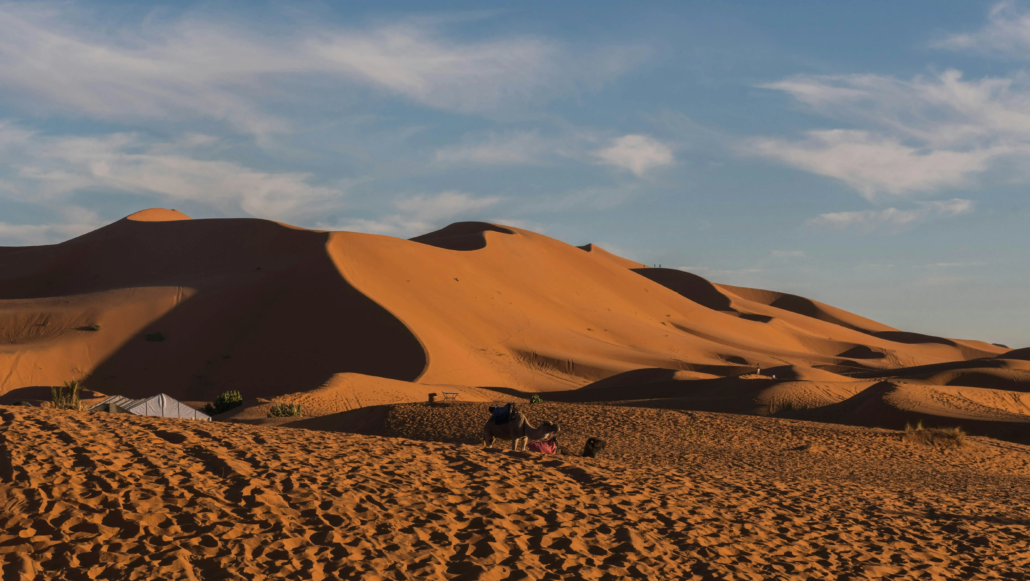
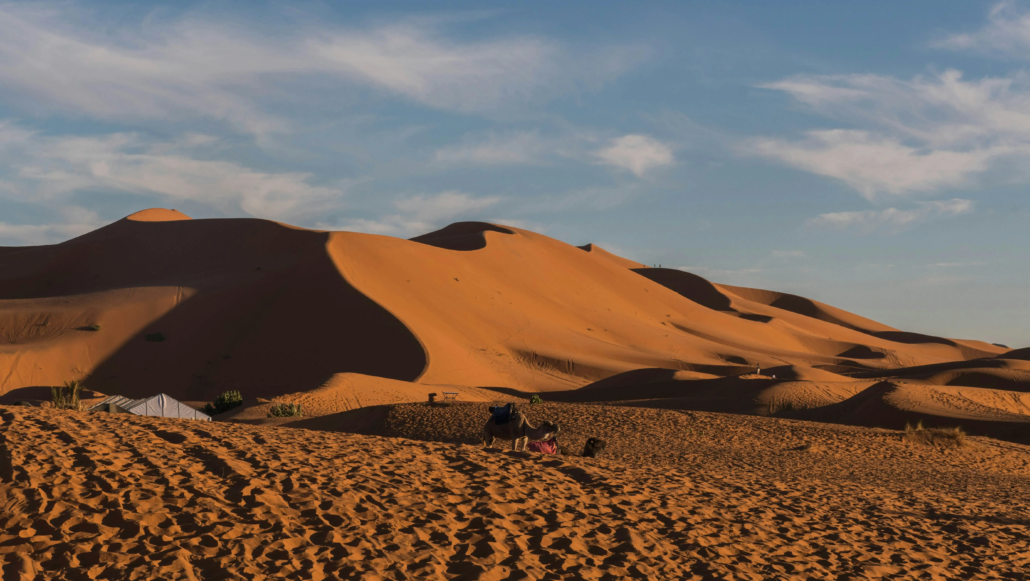
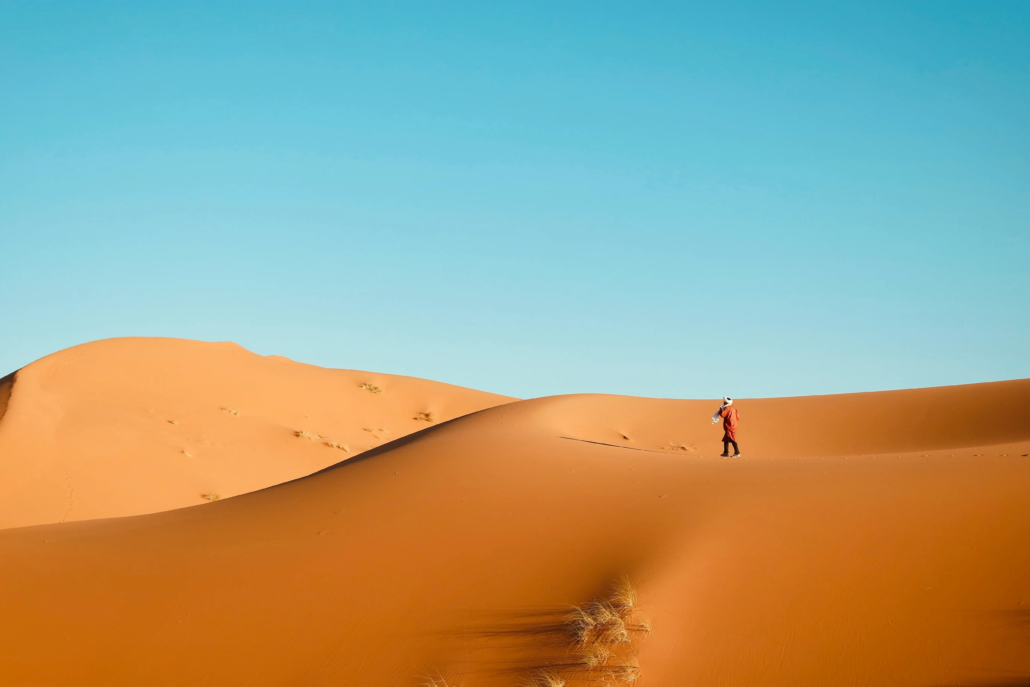
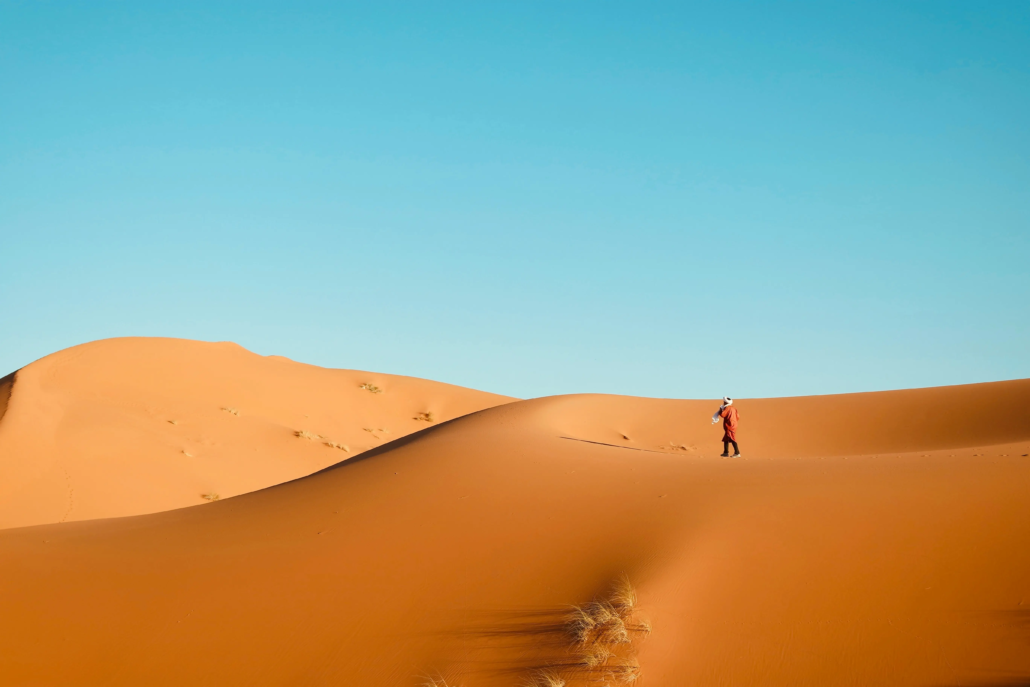
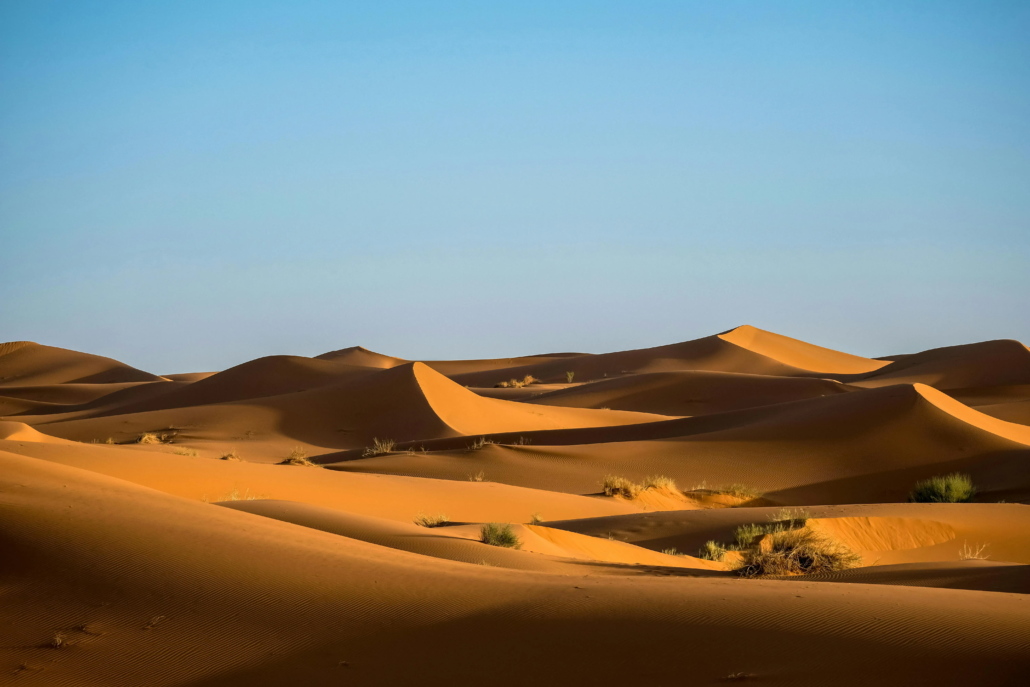
	Moroccan Sahara desert dunes under a clear blue sky in autumn

Let’s be blunt: visiting the Moroccan Sahara in midsummer is a punishing experience. Temperatures regularly hit 48°C (118°F) in July and August — hot enough to make a pizza oven feel refreshing. The desert is spectacular, but you won’t be in any condition to enjoy it.

The sweet spots are October through April, when days are warm and golden (22–28°C), nights dip to a crisp and stargazable 5–10°C, and the dunes cast their most dramatic long shadows at sunrise and sunset.

SeasonTemperaturesVerdict
October – November25–32°C days / 10–15°C nightsPerfect. Quieter crowds, warm sand.
December – February15–22°C days / 2–8°C nightsExcellent. Dramatic skies — pack layers.
March – April22–30°C days / 10–16°C nightsPerfect. Post-rain dunes, crisp mornings.
May – June35–42°C days / 18–24°C nights Manageable, but getting spicy.
July – September43–50°C days / 25–30°C nightsUnless you enjoy feeling like a tagine.

Should You Go at Full Moon or New Moon?

Here’s the insider secret most travel blogs skip: new moon nights are extraordinary for stargazing, while full moon nights turn the dunes silver and allow you to hike at midnight without a torch. Both are magical for entirely different reasons. If you can swing it, plan a 3-night stay that straddles both.

💡 Local Secret: Camp staff at Ghazala Camp in Erg Chigaga can orient your tent opening toward the precise angle where the Milky Way arcs from late autumn through early spring. Ask for it when you book. You’re welcome.

Erg Chebbi vs. Erg Chigaga: Which Part of the Sahara Desert Morocco Is Right for You?

This is the question Morocco desert travelers argue about over mint tea — and both sides have a point. Choosing between these two ergs is essentially choosing between accessible awe and remote wonder.

Erg Chebbi (Merzouga) — The Classic, the Crowd-Pleaser

Erg Chebbi’s rust-red dunes, some rising over 150 metres, are the ones that grace every Morocco travel poster. Merzouga sits right at the dune’s edge, meaning you can be on a camel within 30 minutes of checking in. It’s also considerably easier to reach — just 4 hours from Fez and well-served by shared taxis and bus routes.

The trade-off? You’ll share the experience with a lot of other people, especially at sunset. If solitude matters to you, read our full Erg Chebbi vs Erg Chigaga comparison to find your perfect match.

Erg Chigaga — The Sahara’s Best-Kept Secret

Erg Chigaga requires real commitment to reach — a 2-hour 4×4 ride through hammada (rocky desert) from M’Hamid — but the reward is disproportionately spectacular. This is the largest erg in Morocco, stretching 40 km and reaching dunes of 300 metres. On a weekday morning in November, you might genuinely be the only person visible on the entire horizon.

“Erg Chigaga is what the Sahara looks like before Instagram got to it — wild, infinite, and completely indifferent to your schedule.” — A Ghazala Camp Guest, returning for their 3rd visit

How to Get to the Sahara Desert Morocco Without Losing Your Mind

Transport is where many first-time visitors overcomplicate things. Here’s the honest breakdown:

  • From Marrakech to Erg Chigaga: The most scenic route is a 2-day drive via the Draa Valley and Zagora — easily arranged as part of a guided desert tour from Marrakech that includes the Dades Gorge and Aït Benhaddou along the way.
  • From Ouarzazate: About 5 hours to M’Hamid by road, then the 4×4 stretch into Erg Chigaga. Check desert tours departing from Ouarzazate for ready-made options.
  • To Merzouga/Erg Chebbi: CTM buses connect Marrakech and Fez to Rissani (45 mins from Merzouga). Grand taxis handle the final leg. Budget-friendly and reliable.
  • Flying: Errachidia airport serves the Merzouga region with connections to Casablanca. There’s no commercial airport near Erg Chigaga — which is, honestly, part of its charm.

🐪 Pro Tip: Renting a car? Go for a diesel 4×4 for the Chigaga route. Standard vehicles get stuck in soft sand, and the last thing you want is to become a cautionary tale 20 km from anywhere.

Where to Stay: Luxury Desert Camps in the Sahara Desert Morocco

Ghazala Camp Luxury  — Sahara Desert Morocco Erg Chigaga

There is a world of difference between a budget bivouac and a properly equipped luxury desert camp. And no, sleeping under canvas in the Sahara does not have to mean compromising on comfort.

Ghazala Camp — Erg Chigaga’s Premier Desert Experience

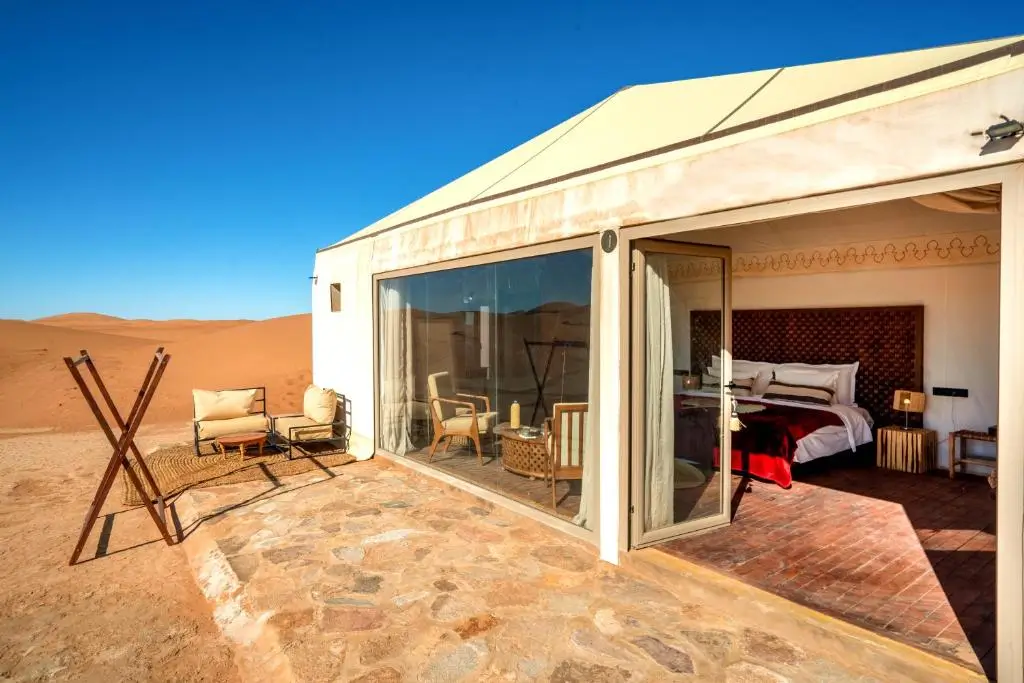
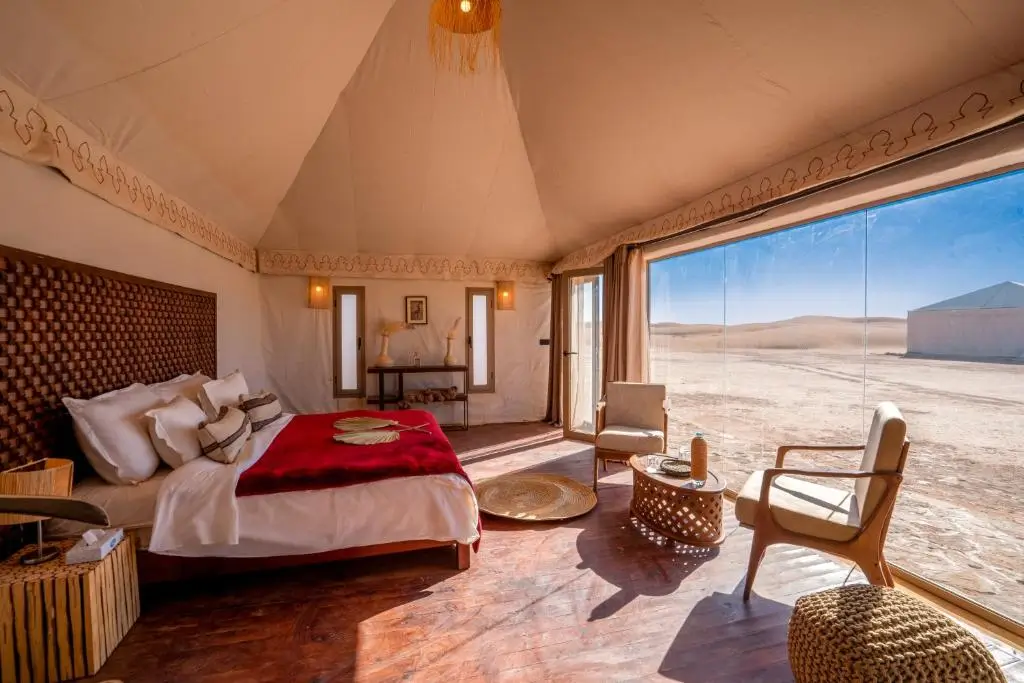
Ghazala Camp sits deep inside Erg Chigaga, far enough from any road noise to make total silence feel like a physical presence. The tented suites come with real beds (actual beds with quality linen — not sleeping mats), en-suite private bathrooms, and Berber-decorated interiors that feel more boutique hotel than campsite.

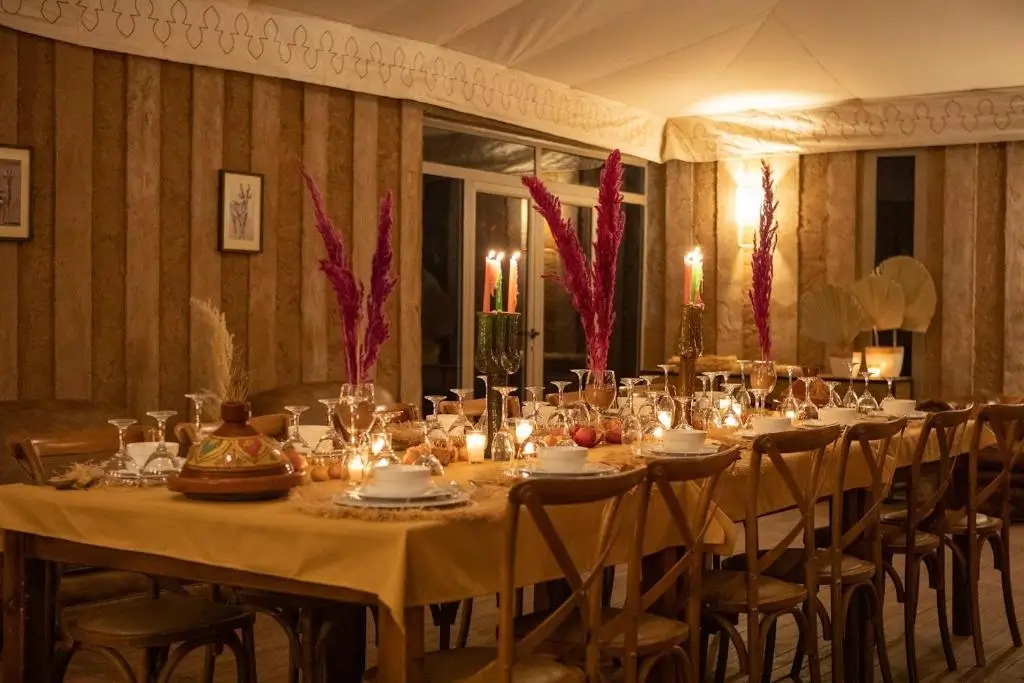
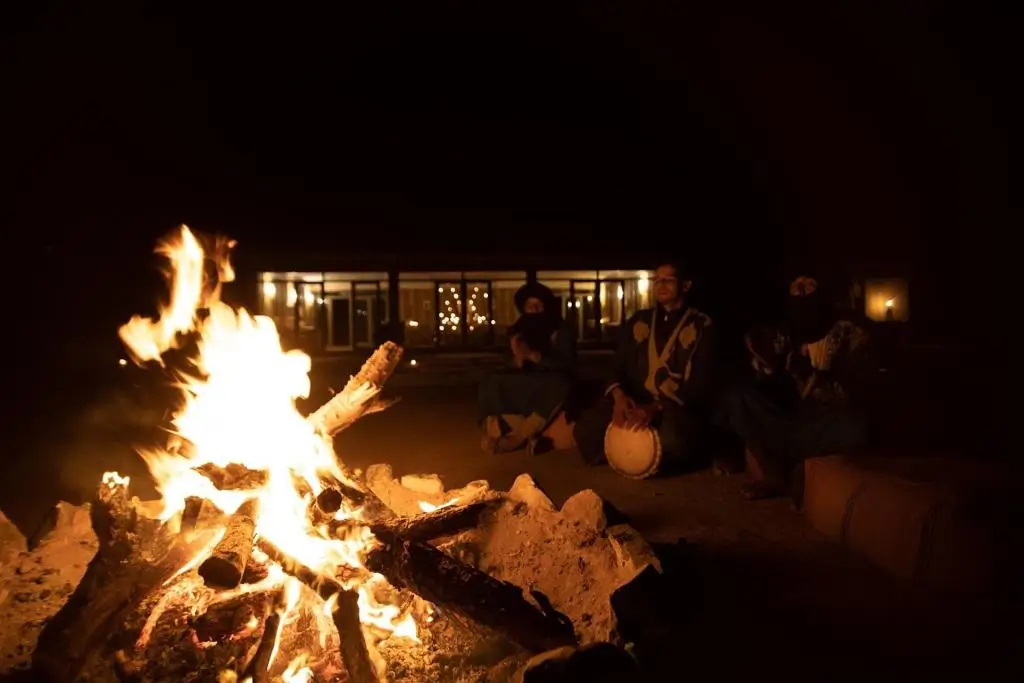
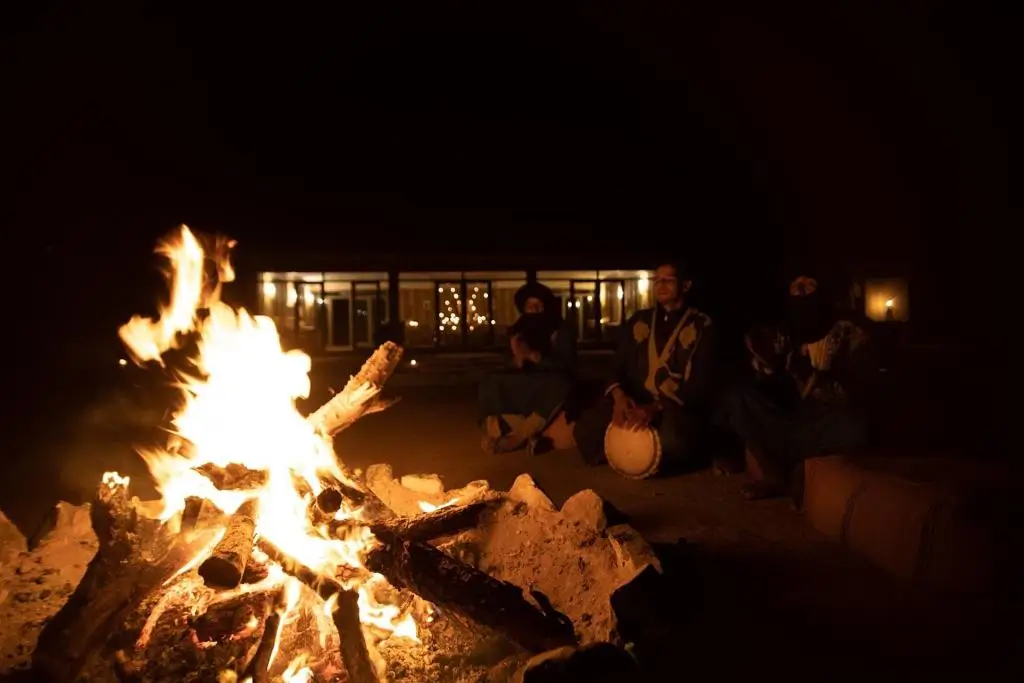
Evening dinner is a proper affair: slow-cooked lamb tagine, harira soup, fresh Moroccan salads, and Saharan herb tea — all eaten with the dunes glowing in firelight. For desert activities in Erg Chigaga, the team organises camel treks at sunrise, sandboard sessions at sunset, guided dune walks, and Gnaoua music nights around the fire.

“The silence here is the loudest thing I’ve ever heard. That’s not a contradiction — you’ll understand the moment you’re standing on the dunes at 2am.” — Rachel, solo traveller from Australia

Top Desert Activities That Go Way Beyond the Camel Selfie

Yes, the camel ride is mandatory. But the Moroccan Sahara has far more to offer than your obligatory hump-mounted photo opportunity.

  1. Sunrise Dune Climb — Set your alarm for 5:30am. Climb the highest dune near camp and watch the shadow line pull back across the sand in real time. Twenty minutes. Zero athletic ability required.
  2. Sandboarding — Exactly what it sounds like. Surprisingly fast. Slightly undignified. 100% worth it.
  3. Stargazing Sessions — Erg Chigaga has essentially zero light pollution. You’ll see the Milky Way, Jupiter’s moons, and probably question several life choices in the best possible way.
  4. 4×4 Desert Safari — Head into the hammada between the ergs to discover fossils, ancient caravan routes, and nomadic Berber settlements.
  5. Berber Music Night — Every evening at Ghazala Camp ends around a fire with local musicians playing guedra and Gnaoua rhythms. It’s the kind of thing you’ll be describing to people for the next decade.

🍵 Cultural Note: When offered mint tea in the desert, always accept — even your fourth cup. Refusing is a mild social faux pas in Berber culture. Also: it’s delicious and keeps you warm at night, so there’s truly no reason not to.

Food, Costs & Practical Realities of Visiting the Sahara Desert Morocco

	Traditional Moroccan lamb tagine served outdoors at a desert camp in Sahara Desert Morocco

Morocco’s desert cuisine is quietly extraordinary. Tagines slow-cooked over charcoal are the backbone of every camp dinner, alongside fluffy Friday couscous, merguez sausages grilled over open flames, and honeyed bastilla pastry for breakfast.

Expect to pay €90–€180 per person per night at a well-equipped luxury camp, which typically includes dinner, breakfast, camel ride, and a fire session. Budget bivouacs run €25–€40 per night. Shared transport from Marrakech to Erg Chigaga costs approximately €15–€25 each way; a private guided tour starts around €180–€250 per day.

Solo travellers — particularly solo women — will find Morocco’s desert region genuinely safe and welcoming. Book transport through your accommodation rather than accepting offers at bus stations. The Moroccan National Tourist Office maintains updated official safety guidance if you want extra reassurance.

“I was nervous about solo travel in Morocco, but Erg Chigaga was honestly where I’ve felt most looked after as a solo woman traveller — the camp team became friends by day two.” — Priya, solo traveller from London


FAQ: Sahara Desert Morocco — Your Questions, Answered Honestly

How many days do I actually need in the Sahara Desert Morocco? Two nights is the realistic minimum for Erg Chigaga (one feels rushed given the distance), while one night works for Erg Chebbi. Three nights lets you explore at your own pace, catch both sunrise and sunset properly, and truly decompress. Most guests leave wishing they’d stayed longer.

Is the Moroccan Sahara safe for solo travellers and families? Yes. Morocco’s southern desert region is considered very safe. Petty tourist-town scams exist but are easily avoided by booking transport through your accommodation and ignoring unsolicited approaches. Families with young children do the Sahara regularly — just pack layers, sunblock, and patience for long drives.

What is the difference between Erg Chebbi and Erg Chigaga? Erg Chebbi (Merzouga) is accessible, photogenic, and has more tourist infrastructure — ideal if you’re short on time. Erg Chigaga is larger, more remote, and sees far fewer visitors — ideal if you want the Sahara to feel like a genuine discovery. Both are magnificent.

What should I pack for a Sahara Desert Morocco trip? Beyond your usual travel kit: a lightweight chèche scarf (essential against sun, wind, and sand), layers for cold nights (fleece in spring/autumn; proper jacket in winter), a headlamp for dune-top stargazing, SPF 50+ sunscreen, and cash in Moroccan dirhams — card machines simply don’t exist this deep in the desert.


Ready? The Dunes Aren’t Getting Any Younger

The Sahara Desert Morocco is one of the rare places on Earth where reality genuinely exceeds expectation. The light is better than the photos. The silence is deeper than you imagined. The hospitality — that you’ll have to experience for yourself.

Whether the crowd-friendly grandeur of Erg Chebbi is your speed, or the vast solitude of Erg Chigaga calls louder, stop scrolling and start planning. The sand shifts a little every day — but the magic stays constant.

Book your night at Ghazala Camp →


Keep reading:

Erg Chigaga Desert Camp: Morocco’s Best-Kept Secret Is Calling Your Name

The Sahara doesn’t whisper — it roars. And somewhere deep in the golden dunes of southern Morocco, far from the tour buses and the Instagram crowds, there’s a stretch of silence so complete it feels almost sacred. That place is Erg Chigaga, and if you’ve never heard of it, buckle up — because this might just be the most transformative trip you never knew you needed.

Whether you’re a seasoned desert wanderer or a first-timer who still thinks “glamping” sounds made up, an erg Chigaga desert camp experience rewires your idea of what travel can actually feel like. No noise pollution. No neighbours fighting over sunloungers. Just you, the wind, a sea of amber dunes the size of small mountains, and a sky so full of stars it looks photoshopped.

Let’s get into it.

What Makes Erg Chigaga So Special? (Spoiler: Everything)

Located about 60 km west of M’hamid el Ghizlane — the last village before the dunes swallow the road — Erg Chigaga is Morocco’s largest and most remote erg, stretching over 40 km of pure Saharan wilderness. While Erg Chebbi near Merzouga gets all the postcards, Erg Chigaga is where travellers who’ve done their homework end up.

The dunes here reach up to 300 metres high. That’s not a typo. You feel genuinely small standing at the base of one, which is either terrifying or liberating depending on your personality (possibly both, simultaneously).

“Erg Chigaga feels untouched. Like the desert is still a secret. You arrive, and within an hour, you forget there’s a world beyond the dunes.” — A recent guest at Ghazala Camp

Because access requires a 4×4 or a multi-day camel trek, the crowd never forms. That’s the whole point.


Why Choose a Desert Camp in Erg Chigaga Over Other Destinations

The Silence Is a Feature, Not a Bug

Most travellers arrive at Erg Chigaga braced for discomfort and leave completely undone by the luxury of doing nothing. No Wi-Fi struggles, no decision fatigue, no “what should we do today?” anxiety. The desert makes those decisions for you — sunrise walk, camel ride, mint tea, nap, sunset, stars. Repeat.

This is also why families, honeymooners, solo travellers, and burnt-out professionals all seem to find exactly what they need here. The desert is, annoyingly, very good at meeting people where they are.

Erg Chigaga vs. Erg Chebbi: Worth Knowing the Difference

FeatureErg ChigagaErg Chebbi
Accessibility4×4 required / camel trekPaved road access
Crowd LevelVery remote, peacefulMore tourist infrastructure
Dune HeightUp to 300mUp to 150m
AuthenticityUntouched, wildMore developed
Best ForDeep immersion, luxury escapesFirst-time Sahara visitors

For a deeper dive into this comparison, check out our full guide: Erg Chebbi vs Erg Chigaga — Which Saharan Desert Should You Visit?

Staying at Ghazala Camp: Luxury Meets the Sahara

Here’s where things get genuinely exciting. Ghazala Camp sits right in the heart of Erg Chigaga, designed to be the kind of desert camp that doesn’t ask you to choose between comfort and authenticity. You get both, which is a rare win in travel.

Think hand-stitched Moroccan wool blankets, proper beds (yes, real beds), candlelit dinners served on low traditional tables under a canopy of stars, and a hammam tent to soothe aching muscles after a long camel trek. The tents are spacious, warm at night when the temperature drops sharply, and beautifully decorated with local textiles and craftsmanship.

“Arriving at Ghazala felt like the desert had rolled out a proper welcome mat. The kind you only find when someone genuinely cares about the experience they’re creating.”

Meals are a full event here — slow-cooked tagines perfumed with saffron and preserved lemon, freshly baked Moroccan bread pulled from clay ovens, harira soup as the stars begin to appear. Food in the desert, eaten in silence with the wind barely audible, is a different dining experience altogether. Read more about the culinary experience at Ghazala Camp here.

Desert Activities That Go Beyond the Usual Checklist

What to Do in Erg Chigaga

Good news: you won’t be bored. Even better news: nothing here feels like a tick-box activity.

  • Sunrise camel trek — Start before dawn. The dunes turn from grey to pink to gold in about 20 minutes and it’ll be the most dramatic light show you’ve ever seen for free.
  • Sandboarding — Yes, it’s exactly what it sounds like. Yes, you will fall. Yes, it’s completely worth it.
  • Guided desert walks — Your local Berber guide will point out desert plants, fossilised shells (the Sahara was once an ocean — mind officially blown), and nomadic trails invisible to untrained eyes.
  • Stargazing — Erg Chigaga sits in one of Africa’s darkest sky zones. Bring a blanket, lie flat on a dune, and start reconsidering your life priorities.
  • Quad biking — For those who want their dune experience with a bit more engine noise.

Explore the full list of desert activities in Erg Chigaga before you arrive — some experiences benefit from advance booking, especially during high season.

“The guides at Ghazala don’t just show you the desert. They introduce you to it.”

How to Get to Erg Chigaga: Practical Info

Getting There from Major Cities

Departure CityEstimated Travel TimeRecommended Route
Marrakech8–10 hoursVia Ouarzazate & Zagora
Ouarzazate5–6 hoursVia Agdez & Zagora
Casablanca11–12 hoursVia Marrakech

The road ends at M’hamid el Ghizlane. From there, Ghazala Camp arranges 4×4 transfers across the desert (roughly 1.5–2 hours depending on conditions). This part of the journey is, arguably, part of the experience itself — the landscape shifts from rocky hammada to soft golden dunes in real time.

If you’re planning a full circuit from Marrakech, check out desert tours from Marrakech or the dedicated tours from M’hamid and Erg Chigaga for structured itinerary options.

💡 Pro Tip: Rent a car one-way to M’hamid, leave it there overnight, and arrange your return transfer via the camp. It saves hassle and lets you explore the Draa Valley at your own pace on the drive in.

Best Time to Visit Erg Chigaga

October to April is the golden window — literally. Daytime temperatures sit between 18°C and 28°C, nights are cool and crisp, and the light is extraordinary. Photographers, take note.

Avoid July and August unless you enjoy the sensation of opening an oven door directly into your face. Summer temperatures in the Sahara regularly exceed 45°C, and even the locals slow right down.

🌟 Local Secret: The weeks just before and after Ramadan are magic. The desert is quieter, prices are slightly lower, and the food — especially the iftar spreads at camp — is extraordinary.

Is Morocco Safe for Solo Travellers?

Short answer: yes, and confidently so. Morocco consistently ranks among Africa’s safest countries for tourism, according to Morocco’s National Tourism Observatory. The desert region specifically is considered extremely low-risk, with a strong culture of hospitality that extends to solo female travellers.

A few common-sense tips worth keeping in mind:

  • Book transfers in advance — Don’t freelance into the deep desert without a guide
  • Dress modestly in villages (shoulders and knees covered goes a long way)
  • Carry cash — Cards are not always accepted outside cities
  • Learn three words of Darija — Shukran (thank you), Labas (hello/how are you), Barak Allahu fik (thank you very much). The locals will love you for it.

FAQ: Erg Chigaga Desert Camp Questions Answered

Q: How far is Erg Chigaga from Marrakech? Erg Chigaga is approximately 560 km from Marrakech by road — roughly 8 to 10 hours depending on your route and stops. Most visitors break the journey with an overnight in Ouarzazate or Zagora, which are both worth a visit in their own right.

Q: Is Ghazala Camp suitable for children? Absolutely. The camp is family-friendly, with activities scaled to different ages and enough open space to keep young explorers thoroughly entertained. Camel rides are particularly popular with kids (and, quietly, with adults pretending they’re doing it just for the children).

Q: What should I pack for a desert camp stay? Pack layers — desert nights drop sharply, even in spring. Sunscreen with high SPF, a headtorch, a light scarf (multipurpose: sun, sand, cold), comfortable walking shoes for dune climbing, and a camera that isn’t just your phone. And leave half your suitcase at home — you genuinely won’t need it.

Q: Can I book Ghazala Camp for special occasions like honeymoons or birthdays? Yes, and the team at Ghazala Camp does this beautifully. Private dinners under the stars, decorated tents, Berber music — the desert is one of the most romantic settings on earth, and the camp knows how to lean into that fully.


The Desert Doesn’t Wait — Neither Should You

There’s a moment at Erg Chigaga — usually around the second sunrise, sitting on a dune with warm tea in your hands — when the urgency of ordinary life completely dissolves. No deadlines, no noise, just sand and sky and the faint sound of a Berber flute drifting from camp.

That moment is why people come back to the Sahara. And it’s why an erg Chigaga desert camp experience at Ghazala Camp belongs on your travel shortlist, not your “maybe someday” list.

Ready to make it real? Start planning your Sahara escape at ghazalacamp.com — your dunes are waiting.


Related Articles You’ll Want to Read Next

Morocco Sahara Desert: Your No-Fluff, Stars-and-Sand Guide to the Trip of a Lifetime

There’s a specific kind of silence you only find in one place on Earth. Not the silence of an empty room or a quiet street at 3 AM — this one hums. It’s alive. You’re sitting atop a camel on the edge of an endless copper dune in the Morocco Sahara Desert, the wind is tracing invisible lines across the sand, and somewhere behind you, your entire concept of “a good holiday” just quietly retired.

Welcome to Morocco’s deep south — wilder, warmer, and more soul-stirring than any travel brochure ever managed to warn you about.

Why the Morocco Sahara Desert Still Surprises Even Seasoned Travelers

Morocco has been on the “must-visit” list for decades. Marrakech, Fes, Chefchaouen — they’re legendary, and rightfully so. But seasoned travelers will tell you the real Morocco, the one that rewires something deep inside you, lives in the Sahara.

The Sahara covers roughly 9 million square kilometers across North Africa, yet Morocco holds some of its most dramatic and accessible corners. You get towering sand dunes, ancient kasbahs, nomadic Berber culture, and — if you time it right — a sky so thick with stars it looks photoshopped. Spoiler: it’s not.

“The desert doesn’t whisper. It speaks. You just have to slow down enough to listen.” — A Berber guide at Erg Chigaga, overheard at dawn

What makes Morocco’s piece of the Sahara particularly special is the sheer variety on offer. From the famous rust-colored dunes of Erg Chebbi near Merzouga to the raw, wild remoteness of Erg Chigaga near M’Hamid — no two Sahara experiences here are the same. Think of it like choosing between two great restaurants: one’s Michelin-starred and buzzing, the other’s a hidden gem the locals love.

Erg Chebbi vs. Erg Chigaga: Which Morocco Desert Should You Choose?

This is the question everyone Googles at 11 PM before booking their Morocco desert trip — and it deserves a real answer, not a vague “it depends.”

FeatureErg Chebbi (Merzouga)Erg Chigaga (M’Hamid)
Dune HeightUp to 150mUp to 100m
Crowd LevelModerate to BusyQuiet & Remote
AccessibilityPaved roads to the base4WD required (2h offroad)
Best ForFirst-timers, short tripsAdventure seekers, photographers
Camp StyleWide range (budget to luxury)Mostly boutique & luxury camps
Unique AppealIconic orange dunes, sunrise viewsWild, untouched, cinematic landscape

Both are magnificent. But if you want to go off-radar — truly off-radar — Erg Chigaga is where the magic quietly lives. It takes more effort to reach, and that’s exactly the point. Fewer footprints on the dunes. More silence. More stars.

How to Get to the Morocco Sahara Desert (Without Losing Your Mind)

Let’s be practical here — Morocco is big, and the desert is really far from the airport.

From Marrakech: The classic route. You’re looking at a 9–10 hour drive to Merzouga or 8–9 hours to M’Hamid, depending on stops. Most people book a guided desert tour from Marrakech that combines driving through the High Atlas Mountains, Dades Gorge, Todra Gorge, and the ksar of Aït Benhaddou along the way. Honestly? The road is half the adventure.

From Ouarzazate: Already deep south? A desert tour departing from Ouarzazate cuts 2–3 hours off the journey and still passes through jaw-dropping scenery.

By Bus: CTM and Supratours run routes to Merzouga and Zagora, but they’re long and not always punctual. Budget travelers can manage it — just pack patience along with your sunscreen.

“Don’t rush the road to the desert. It’s not just the destination — the journey through the Atlas is where Morocco starts showing off.”

Morocco Sahara Desert Travel Tips: The Stuff No One Tells You

🌡️ Seasons Matter More Than You Think

  • October–April: The golden window. Warm days (20–28°C), cool nights, and magical light for photography.
  • May–September: Extreme heat. Dune surface temperatures can hit 80°C. Unless you’re auditioning for a survival show, wait.
  • December–February: Cold nights (near 0°C), so pack layers. But the low-season solitude and crisp air? Totally worth it.

💰 Rough Budget Breakdown

ExperienceEstimated Cost
Shared 3-day Marrakech–Sahara tour€120–€180/person
Private 3-day tour€300–€600/person
Budget desert camp (per night)€30–€60/person
Luxury desert camp (per night)€150–€400/person
Camel trek (1–2 hours)€20–€40/person

⚠️ Pro Tip: Always confirm what’s included in your camp price — dinner, breakfast, and the camel ride are sometimes extras. Ask upfront. Saharan hospitality is generous, but assumptions cost money.


Sleeping Under the Stars: The Desert Camp Experience

Okay, let’s talk about the thing everyone’s most excited (and a little nervous) about: sleeping in a desert camp.

First — yes, they have proper beds. No, you’re not sleeping on sand (unless you want to, in which case, go for it, but don’t complain to me about the sand in your hair for three days).

At Ghazala Camp, nestled right in the heart of Erg Chigaga, luxury meets the Sahara in the most honest way possible. Think spacious Berber-style tents with real beds, candlelit Moroccan dinners under the open sky, and live gnawa or Berber music by the fire. The kind of evening that gets permanently attached to your memory.

What makes Ghazala Camp’s desert experience genuinely different from the cookie-cutter camps near Merzouga is the location itself: Erg Chigaga is harder to reach, so the guests who arrive are invested. The atmosphere is quieter, more intentional. You go to bed listening to nothing except the wind, and you wake up to a sunrise that makes you slightly angry it’s free.

“I’ve stayed in five-star hotels on four continents. My night at Erg Chigaga camp is still the best sleep I’ve ever had. Go figure.” — Guest review, Ghazala Camp


Desert Activities in the Morocco Sahara: Beyond the Camel Photo

Yes, the camel photo is coming. You know it, I know it, your future Instagram followers know it. But the Morocco Sahara desert offers a lot more than one golden-hour selfie.

Head over to the full list of Erg Chigaga desert activities for a deep dive, but here’s a quick taste:

  • Sandboarding down the face of a 100m dune (harder than it looks, more fun than it sounds)
  • Sunrise camel trekking before the heat kicks in
  • Stargazing with zero light pollution — bring a blanket, not a phone screen
  • 4WD dune bashing for the adrenaline crowd
  • Berber cooking workshops at camp — tagine never tasted this earned
  • Guided walks with local nomadic guides who know this desert by feel, not GPS

If you want to go deeper into the desert or combine a Sahara stay with a cultural circuit, Sahara Services offers custom Morocco tours — from short Marrakech excursions to full two-week itineraries hitting the imperial cities, coast, and deep south.

Cultural Etiquette in the Moroccan Desert

Before you pack, a few things worth knowing so you don’t accidentally offend your Berber hosts — who are, by the way, among the warmest people you’ll ever meet.

  • Dress modestly, especially in villages en route. Shoulders and knees covered goes a long way.
  • Accept mint tea when offered. Refusing it is a bit like declining a hug from a grandmother. Just drink it — it’s delicious anyway.
  • Learn three words of Darija (Moroccan Arabic): Shukran (thank you), Labas (all good), and Bismillah (said before eating). You’ll get smiles for a week.
  • Bargaining is normal in souks, but aggressive haggling in a desert village feels out of place. Read the room.
  • Photography: Always ask before photographing locals or their homes. A simple gesture and a smile usually gets a yes.

Is the Morocco Sahara Desert Safe? (The Honest Answer)

Genuinely, yes — and this comes from someone who has been talking to travelers about Morocco for years. The Sahara region, including routes from Marrakech through Ouarzazate and on to M’Hamid or Merzouga, is very safe for tourists, including solo travelers and solo women.

That said, sensible precautions always apply:

  • Book through reputable operators with verifiable reviews
  • Share your itinerary with someone at home
  • Stay hydrated — desert heat is relentless and non-negotiable
  • Stick to guided treks if you’re venturing far from camp

The UK Foreign Office and most Western governments rate Morocco as a generally safe travel destination with standard tourist precautions advised.


FAQ: Morocco Sahara Desert Questions Answered

Q: How many days do I need in the Morocco Sahara Desert? A minimum of two nights gives you time to truly settle in — one for arrival and the first sunset, one full day for activities and a proper sunrise. Three nights is the sweet spot for a transformative experience without rushing.

Q: Can I visit the Sahara independently without a tour? Yes, especially if you rent a car (4WD strongly recommended for Erg Chigaga). But a guided experience adds depth — your guide will share stories, navigate the dunes safely, and connect you to local culture in ways Google Maps simply can’t.

Q: What should I pack for a Morocco desert trip? Layer up: a light jacket for cool evenings, a scarf for sandstorms and sun, sturdy closed shoes for dune climbs, SPF50+, a power bank, and a headtorch. Leave the roller suitcase at the riad — a soft duffel bag is your desert best friend.

Q: Is the Morocco Sahara Desert worth the journey from Marrakech? Every single kilometer of it. The drive through the High Atlas, the kasbahs, the gorges — and then the dunes appear on the horizon and your breath genuinely catches. Worth it doesn’t even begin to cover it.


Start Planning Your Morocco Sahara Desert Adventure

The Morocco Sahara Desert doesn’t care about your to-do list, your deadlines, or the 47 unread emails waiting in your inbox. It offers something increasingly rare: genuine stillness, sky-wide beauty, and a reminder that the world is much bigger and more beautiful than your screen suggests.

Whether you choose the iconic dunes of Erg Chebbi or the wild solitude of Erg Chigaga at Ghazala Camp, one thing is certain — you’ll leave the desert carrying a piece of it. Possibly in your shoes. Definitely in your chest.

Book the trip. The dunes aren’t going anywhere. But the version of you that hasn’t seen a Sahara sunrise yet? That one’s on borrowed time.


Related Articles Worth Reading Next

Erg Chebbi vs Erg Chigaga: Which Moroccan Desert Will Steal Your Heart?

Here’s the thing about choosing between Erg Chebbi vs Erg Chigaga—it’s like asking whether you prefer chocolate or vanilla when both flavors are absolutely mind-blowing. After guiding travelers through Morocco’s Sahara for over two decades, I’ve watched countless visitors agonize over this exact decision. So let me save you some Google searches and break down everything you need to know about these two magnificent desert destinations.

The truth? This choice matters more than which Instagram filter you’ll use (though trust me, both deserts will make your photos pop). The experience waiting for you in each location is dramatically different, and picking the wrong one could mean missing the exact Sahara adventure you’ve been dreaming about.

Understanding Morocco’s Desert Ergs: The Basics

Moroccan desert erg formations Sahara

Before we dive into the erg chebbi vs erg chigaga showdown, let’s get our terminology straight. An “erg” is essentially a vast sea of sand—think rolling waves frozen in golden granules. Morocco hosts two major ergs in its Saharan region, and they couldn’t be more different if they tried.

Both deliver that classic Lawrence of Arabia vibe you’re craving: towering dunes, camel caravans silhouetted against fiery sunsets, and night skies so packed with stars you’ll finally understand why ancient travelers navigated by them. But the similarities basically end there.

Erg Chebbi towering orange dunes near Merzouga Morocco sunset

Let’s talk about Erg Chebbi first—the celebrity of Moroccan deserts. Located near the small town of Merzouga in southeastern Morocco, these dunes have been welcoming visitors since the early tourism boom. Getting here is refreshingly straightforward: a paved road runs the entire 560 kilometers from Marrakech, meaning you can actually drive a regular car right up to the dunes’ edge.

The landscape itself? Spectacular. Erg Chebbi’s dunes shoot up to 150 meters high—that’s taller than a 40-story building, folks. These massive sand mountains glow brilliant orange-gold at sunrise and sunset, creating that postcard-perfect desert moment you’ve been visualizing. The dune field stretches roughly 22 kilometers long and 5-7 kilometers wide, compact enough that you can grasp its entirety yet vast enough to feel genuinely immersed in the Sahara.

Pro Tip Box: Beating the Crowds in Erg Chebbi
Visit during April-May or September-October for ideal weather and fewer tourists. Winter brings cold nights (seriously, pack warm layers!), while summer heat can be brutal. Book your desert tour from Marrakech well in advance during peak season (November-February) when Moroccan families and European tourists flood the area.

The Erg Chebbi Experience: Convenience Meets Comfort

Merzouga has exploded into a proper desert town, complete with restaurants, shops, and over 200 accommodation options ranging from budget guesthouses to luxury camps with actual air conditioning. Yes, air conditioning in the Sahara—wild, right?

Camel treks here typically last 1-2 hours, just long enough to reach the camps nestled in the dunes. Most camps organize evening entertainment featuring Berber music and drumming around crackling bonfires. It’s undeniably fun and photogenic, though sometimes you’ll hear drums from neighboring camps drifting across the sand—a reminder you’re sharing this wilderness with plenty of other travelers.

The route from Marrakech passes through some seriously impressive scenery: the UNESCO-listed Ait Benhaddou kasbah, dramatic Todra Gorge, and the fragrant Valley of Roses. Breaking the journey into 3-4 days lets you actually enjoy these stops rather than just cramming everything into an exhausting sprint.

Secure your night at our luxury Merzouga desert camp and enjoy a breathtaking stay in the heart of Erg Chebbi. With glowing dunes, warm hospitality, and unforgettable sunsets, your dream Sahara experience is just a booking away.

Erg Chigaga: The Wild Card That Plays by Its Own Rules

Erg chigaga luxury desert camp

Now let’s discuss Erg Chigaga—the rebel sibling that refuses to compromise. Located near the tiny village of M’Hamid in southwestern Morocco, this massive dune system only started welcoming tourists in the 1990s after border tensions with Algeria eased. And honestly? That late start preserved something magical.

Getting to Erg Chigaga requires commitment. The paved road ends at M’Hamid, and from there you’ll need a proper 4×4 vehicle for a 2-4 hour off-road journey through rocky desert terrain, dried lake beds, and eventually the dunes themselves. This isn’t inconvenient—it’s part of the experience. Every bump and jostle reminds you that you’re heading somewhere genuinely remote.

Size-wise, Erg Chigaga dwarfs Chebbi. We’re talking 35 kilometers long and 15 kilometers wide—Morocco’s largest dune system. The dunes themselves reach around 120 meters (still massively impressive), but what really hits different is the sheer vastness. Looking out from a high dune, you see nothing but sand stretching toward infinity.

Local Secrets Box: Why Tour Operators Love Chigaga Fewer camps (maybe 20-30 versus Chebbi’s 200+) mean authentic solitude. Many nights, yours might be the only light visible for miles. The desert activities in Erg Chigaga feel more adventurous—longer camel treks, 4×4 dune bashing across pristine sand seas, and zero light pollution for mind-blowing stargazing sessions where the Milky Way literally casts shadows.

The Erg Chigaga Journey: Adventure Over Ease

The 9-hour drive from Marrakech follows the stunning Draa Valley, where ancient kasbahs crumble picturesquely among date palm groves. Consider desert tours from Ouarzazate—the “Gateway to the Sahara”—which adds Hollywood movie studios and breathtaking mountain passes to your itinerary.

Accommodations lean toward eco-friendly luxury camps that blend Berber tradition with serious comfort. No air conditioning here, but traditional tent design plus cooler desert nights make it unnecessary. What you gain instead is authenticity—camps are smaller, staff ratios are higher, and you’re more likely to share mint tea with nomadic Berber families still living traditional lifestyles.

Many travelers choosing tours from M’Hamid to Erg Chigaga spend 3-5 days exploring the region, allowing time for multi-day camel treks, visits to nomadic families, and crossing the dried lake bed of Iriqui National Park—a UNESCO Biosphere Reserve rich with surprising desert wildlife.

Making Your Choice: Erg Chebbi vs Erg Chigaga

erg chigaga vs Erg chebbi

So which desert wins? Plot twist—there’s no wrong answer, only different adventures.

Choose Erg Chebbi If:

  • You’re short on time (3 days from Marrakech is doable)
  • Accessibility matters (paved roads, easy logistics)
  • You prefer structured experiences with plenty of amenities
  • You’re combining desert visits with a Marrakech-Fes circuit
  • You want those ultra-tall dunes for epic sunrise climbs
  • You’re traveling solo and prefer established tourist infrastructure

Choose Erg Chigaga If:

  • You crave genuine wilderness and solitude
  • You don’t mind off-road adventures and longer travel times
  • Authenticity trumps convenience every time
  • You want the “real” nomadic Sahara experience
  • You’re willing to invest 4-5 days for proper immersion
  • You prefer boutique camps over mass tourism

According to the official Morocco tourism website, both deserts receive international acclaim, but the Moroccan National Tourist Office notes increasing interest in Erg Chigaga among travelers seeking off-the-beaten-path experiences.

Best Time for Erg Chebbi vs Erg Chigaga

Timing applies equally to both locations. Spring (March-May) and autumn (September-November) deliver perfect conditions: warm days around 77°F (25°C), cool nights perfect for sleeping under stars, and clearer skies for photography. Winter (December-February) brings brutal nighttime cold but fewer crowds and incredible clarity. Summer (June-August) is scorching but attracts budget travelers taking advantage of rock-bottom prices.

Avoid Ramadan unless you’re specifically interested in the cultural experience—many services reduce hours, and eating in public during daylight feels awkward.

Practical Stuff Nobody Tells You

Getting There: Both deserts sit 8-10 hours from Marrakech. Break the journey into 2-3 days minimum, or you’ll arrive too exhausted to enjoy anything. Most visitors book organized tours—solo driving is possible but challenging without GPS expertise and Arabic skills.

What to Pack: Regardless of which desert you choose, bring layers (seriously—temperature swings are wild), comfortable walking shoes, sunscreen, sunglasses, a headlamp, and dust-proof camera protection. A lightweight scarf protects against sand and sun while respecting local customs.

Budget Reality Check: Erg Chebbi offers more budget options ($50-80/night including meals and camel rides). Erg Chigaga skews toward mid-range luxury ($100-200/night) due to smaller camp sizes and included 4×4 transfers.

Frequently Asked Questions

Q: Can I visit both Erg Chebbi and Erg Chigaga on one trip?
Technically yes, but they’re 400+ kilometers apart requiring completely different routes. Unless you have 10+ days and serious stamina, pick one and do it properly. Rushing both guarantees you’ll spend more time in vehicles than enjoying the desert.

Q: Which desert is better for photography?
Erg Chebbi wins for dramatic, tall dune compositions. Erg Chigaga excels for vast, minimalist landscapes and authentic cultural shots. Both deliver stunning sunrise/sunset opportunities. Pack extra memory cards regardless—you’ll shoot way more than planned.

Q: Is Erg Chigaga safe for families with kids?
Absolutely! The 4×4 journey thrills older kids, and camps welcome families warmly. Just ensure your children can handle basic camping conditions (shared bathrooms in some camps, no WiFi for entertainment). Erg Chebbi offers more amenities if you need them.

Q: Do I need a guide for either desert?
100% yes for Erg Chigaga—GPS fails regularly, and navigation requires local knowledge. Erg Chebbi is technically more accessible, but guides vastly improve your experience through local insights, language help, and avoiding tourist traps. Book reputable companies only; cheap operators cut corners on safety.

Your Sahara Awaits

Look, I’ve watched thousands of travelers return from both deserts with that glazed, blissful expression that screams “I just had a life-changing experience.” The Sahara doesn’t do mediocre—whether you’re watching the sun paint Erg Chebbi’s towering dunes molten gold or sitting in profound silence as Erg Chigaga’s vast emptiness recalibrates your sense of scale, you’re signing up for magic.

My honest advice after 20+ years? If this is your first desert experience or you’re time-constrained, Erg Chebbi delivers maximum impact with minimum logistics stress. If you’re a seasoned traveler craving something raw and real, Erg Chigaga rewards your adventurous spirit with memories that outlast any tourist hotspot.

The Sahara has waited millions of years for you. Another few months planning the right approach won’t hurt. Book that trip, pack your sense of adventure, and prepare for one of travel’s most transformative experiences.


  • Erg Chigaga Guide: Everything you need to know about Morocco’s remote desert paradise

Want personalized advice on planning your Morocco trip? Drop your questions in the comments—I’m here to help make your North African dreams come true!

Erg Chigaga: Morocco’s Hidden Desert Paradise Where Silence Speaks Louder Than Words

So you’re planning a trip to Morocco’s Sahara Desert? Smart move. But here’s the thing most guidebooks won’t tell you upfront: Erg Chigaga isn’t your average tourist trap with camel rides and Instagram crowds. This is where the real Sahara begins—where cell service dies, WiFi becomes a distant memory, and the only thing louder than your thoughts is the crunch of sand under your boots.

I’ll be straight with you. Getting to this remote corner of Morocco takes commitment. But that’s precisely what makes it magical.

Why Erg Chigaga Deserves Your Desert Dreams

Erg Chigaga Morocco vast untouched sand dunes stretching 35 kilometers across Sahara desert

Morocco’s largest sand sea stretches across roughly 35 kilometers of untouched wilderness. Unlike its more famous cousin Erg Chebbi near Merzouga, reaching Erg Chigaga requires a proper 4×4 vehicle and at least two hours of off-road adventure from M’Hamid El Ghizlane. The paved road literally ends, and that’s when your real journey starts.

The dunes extend approximately 35 kilometres by 15 kilometres, with peaks rising over 50 metres high. But here’s what the numbers don’t capture: the profound silence, the way golden sand shifts from honey to crimson as sunset approaches, and how you’ll find yourself alone with your thoughts in ways that feel almost spiritual.

The Journey Matters As Much As The Destination

Most travelers kick off their adventure from Marrakech, which sits about 8-9 hours away by road. Yes, that’s a full day of driving. But calling it “just a drive” is like calling the Mona Lisa “just a painting.”

Your route winds through the spectacular Tizi n’Tichka mountain pass, drops into the UNESCO-listed kasbah village of Aït Benhaddou (you know, where they filmed Game of Thrones and Gladiator), cruises through the lush Draa Valley with its three million date palms, and eventually lands you in M’Hamid—the official edge of civilization.

Pro Tip: Break up your journey with an overnight stay in Ouarzazate or Zagora. Your back will thank you, and you’ll arrive at your luxury desert camp accommodation fresh enough to actually enjoy that sunset camel trek instead of immediately collapsing into bed.

What Makes Erg Chigaga Different From Erg Chebbi?

Look, I’m not here to trash Erg Chebbi. It’s beautiful, accessible, and perfect for folks with limited time. But Erg Chigaga plays in a different league entirely.

FactorErg ChigagaErg Chebbi
Distance from town50 km from M’HamidWalking distance from Merzouga
Crowd levelsBarely anyoneDozens of camps, lots of tourists
Vehicle needed4×4 mandatoryRegular car works fine
AuthenticityTrue Sahara wildernessMore developed/commercial
Dune heightUp to 300 metersUp to 150 meters (higher)
Size35km x 15km (larger)Smaller area overall

The real difference? Solitude. At Erg Chigaga, you might see two or three other camps in the distance. At Erg Chebbi, you’re sharing the dunes with ATV tours, quad bikes, and dozens of other visitors. Your choice depends on whether you want a desert experience or a desert escape.

One travel expert puts it perfectly:

“While not as readily accessible, Erg Chigaga rewards more adventurous travelers with unspoiled serenity, authentic Berber culture, and plenty of adventure.”

Where To Stay: Luxury Meets Authentic Desert Life

"Erg Chigaga Morocco luxury desert camp interior with traditional Berber decor and modern amenities

Here’s where things get interesting. Erg Chigaga doesn’t have the massive resort-style camps you’ll find up north. Instead, you get intimate, carefully designed retreats that balance comfort with authenticity.

Ghazala Camp exemplifies this philosophy beautifully. We’re talking king-size beds, private bathrooms with actual running water, and terraces where you can watch stars appear one by one like someone’s slowly turning on the universe’s light switches. The seven luxury lodges accommodate up to 20 guests total, which means you’re never fighting crowds for the perfect sunset viewing spot.

But here’s what really matters: the silence. When night falls and dinner ends, step outside your tent and listen. That absence of sound—no traffic, no planes, no ambient urban hum—hits differently. It’s almost loud in its quietness.

Local Secret: Most camps serve breakfast around 8 AM. Wake up at 5:30 instead and catch the sunrise from the nearest dune. You’ll have the entire desert to yourself, and the way morning light transforms the landscape from purple to pink to gold will make losing that sleep totally worthwhile.

Desert Activities That Actually Matter

Erg chigaga desert activities

Forget generic “desert activities” lists. Here’s what you should actually do at Erg Chigaga:

  • Camel trekking at golden hour: Yes, it’s touristy. Yes, your legs will ache. Yes, you absolutely must do it. The camel ride experience connects you to centuries of Saharan trade routes in ways no 4×4 ever could.
  • Sandboarding the big dunes: Like snowboarding, but warmer and with way more sand in unfortunate places. Bring a bandana.
  • Stargazing without light pollution: The Sahara sits far from any cities, making it one of Earth’s best natural planetariums. Download a star map app before you arrive (remember, no internet out here).
  • 4×4 desert safari: Let experienced drivers take you deeper into the sand seas. You’ll visit dried lake beds, spot desert wildlife, and see the famous Iriqui Lake—a 20-kilometer-wide seasonal lake bed that occasionally fills with water.
  • Traditional sand bread making: Learn this ancient Berber technique directly from locals. The sand bread making workshop isn’t just about bread—it’s about understanding desert survival traditions that go back centuries.

When Should You Visit Erg Chigaga?

Morocco’s desert climate swings more dramatically than you might expect. Here’s the honest breakdown:

October through April: Peak season, and for good reason. Daytime temperatures hover around 20-25°C (68-77°F), while nights can drop to 5-10°C (41-50°F). Pack layers. Seriously—that “mild” day can turn into a genuinely cold night.

May and September: Shoulder season sweet spot. Fewer tourists, pleasant weather, better rates at camps. Just avoid May if you’re heat-sensitive—temperatures start climbing fast.

June through August: Only for the brave or foolish. Daytime temps regularly hit 45°C (113°F) or higher. Some camps close entirely. If you must visit in summer, plan activities for early morning and late evening only.

Pro Tip: Spring (March-April) brings occasional wildflowers after winter rains. The contrast of blooms against golden sand creates surreal photo opportunities you won’t find any other time of year.

Getting There: Your Practical Guide

Let’s talk logistics because getting to Erg Chigaga isn’t exactly straightforward.

From Marrakech (Most Common Route)

The 8-9 hour journey breaks down like this:

  1. Marrakech to Ouarzazate (4 hours): Cross the High Atlas Mountains via the Tizi n’Tichka pass. The views are spectacular, the hairpin turns less so if you get carsick.
  2. Ouarzazate to Zagora (3 hours): Drive through the Draa Valley. Stop at date palm cooperatives and pick up some fresh Medjool dates—they taste nothing like the dried ones back home.
  3. Zagora to M’Hamid (2 hours): The landscape shifts from green valley to increasingly arid terrain. This is your last chance for ATMs, pharmacies, and cell signal.
  4. M’Hamid to Erg Chigaga (2-3 hours by 4×4): Off-road through the “black desert” (dark stone plains), across sandy tracks, and finally into the golden dunes themselves.

Alternative Routes

Flying into Zagora from Casablanca cuts your drive to roughly 3 hours, but flights only operate Friday through Sunday. The return journey typically routes through Foum Zguid—a more direct but even more remote path that passes ancient fossil beds and seriously impressive rock formations.

Most travelers book transport through their camp. Trust me on this: attempting the M’Hamid to Erg Chigaga stretch without an experienced driver ranks somewhere between “bad idea” and “potential disaster.” The tracks shift with every windstorm, GPS becomes useless in the dunes, and getting stuck in soft sand without proper equipment means a very long, very hot wait for rescue.

What To Pack For Your Desert Adventure

The desert seems simple until you’re actually there. Here’s what you genuinely need:

Essentials:

  • Layered clothing (mornings and nights get surprisingly cold)
  • Closed-toe shoes for walking in sand
  • Sunglasses and sun hat (the sun reflects off sand with brutal intensity)
  • High-SPF sunscreen (reapply obsessively)
  • Head scarf or bandana (sand gets everywhere)
  • Headlamp or flashlight
  • Personal toiletries and medications

Leave Behind:

  • Hair dryer (most camps have limited electricity)
  • Excessive jewelry (sand is gritty and abrasive)
  • Expectations of constant connectivity (embrace the digital detox)
  • White clothing (sand stains everything)

Local Secret: Bring a small bag for dirty shoes. You’ll want to keep sand out of your tent, and having a dedicated spot for dusty footwear makes life much easier.

The Wildlife You Didn’t Expect

Think deserts are lifeless? Think again. The Sahara hosts various flora and fauna that have adapted to extreme conditions. The nearby Iriqui National Park protects species like Dorcas gazelles, fennec foxes, and various reptiles.

Bird watchers should keep eyes skyward for desert-adapted species. And if you’re incredibly lucky, you might spot tracks from rarely-seen mammals that move through the area at night when temperatures drop.

Cultural Etiquette: Respecting Berber Hospitality

The camps at Erg Chigaga are often run by local Berber families who’ve inhabited these regions for generations. Here’s how to be a respectful guest:

  • Accept tea offerings: Mint tea is sacred here. Refusing comes across as rude. Even if you’ve had six cups, smile and sip slowly.
  • Dress modestly: Morocco is relatively relaxed, but covering shoulders and knees shows respect, especially in more traditional settings.
  • Ask before photographing people: Always request permission first. Offer to share the photo via email—it’s a nice gesture.
  • Learn basic Arabic or French phrases: “Shukran” (thank you) and “salam alaikum” (peace be upon you) go far.
  • Tip fairly: Camp staff work hard in challenging conditions. Budget roughly 50-100 MAD per day for tips, distributed among guides, cooks, and other staff.

Frequently Asked Questions About Erg Chigaga

How far is Erg Chigaga from Marrakech?

Approximately 360 kilometers (224 miles) as the crow flies, but closer to 400 kilometers by road. The drive takes 8-9 hours with stops, though smart travelers split this into two days with an overnight stop in Ouarzazate or Zagora.

Is Erg Chigaga suitable for families with children?

Absolutely, though kids should be at least 5-6 years old to fully appreciate the experience. The long drive can be challenging for very young children. That said, many families report their desert stay as their trip’s highlight. Ghazala Camp’s spacious lodges work well for families, and activities like sandboarding and camel rides delight kids of all ages.

Do I need a 4×4 vehicle to reach Erg Chigaga?

Yes, absolutely. The final stretch from M’Hamid involves deep sand, rocky terrain, and shifting tracks that require four-wheel drive and experienced navigation. Most visitors arrange transport through their desert camp—it’s included in many packages and removes the stress of desert navigation.

What’s included in a luxury desert camp stay at Erg Chigaga?

Packages vary, but typically include accommodation, all meals, sunset and sunrise experiences, camel treks, Berber music around the campfire, and sometimes activities like sandboarding. Check with your specific camp—Ghazala Camp’s offerings, for instance, include breakfast in their exceptional restaurant, desert trekking options, and various cultural experiences.

Your Desert Adventure Awaits

Erg Chigaga isn’t for everyone. It demands time, flexibility, and a willingness to disconnect from the digital world. You’ll spend hours in a 4×4, sand will infiltrate places you didn’t know sand could reach, and your Instagram stories might not upload until you’re back in civilization.

But here’s what you get in return: authentic Sahara majesty that hasn’t been polished and packaged for mass tourism. You get silence that makes you understand why mystics retreat to deserts. You get stars so bright they cast shadows. You get sunrise colors that cameras simply can’t capture.

Most importantly, you get perspective. Something about sitting on a sand dune that’s been there for millennia, watching the sun paint the sky in impossible colors, makes your daily worries seem refreshingly small.

Ready to trade WiFi for wonder? Start planning your Erg Chigaga luxury desert experience today. The Sahara is waiting, and trust me—it’s not going anywhere.


Want to dive deeper into your Morocco adventure? Check out these resources:


This article was crafted to help travelers make informed decisions about visiting Erg Chigaga. For booking inquiries and personalized itinerary planning, contact Ghazala Camp directly.