Sahara Desert Morocco: The Only Guide You’ll Ever Need
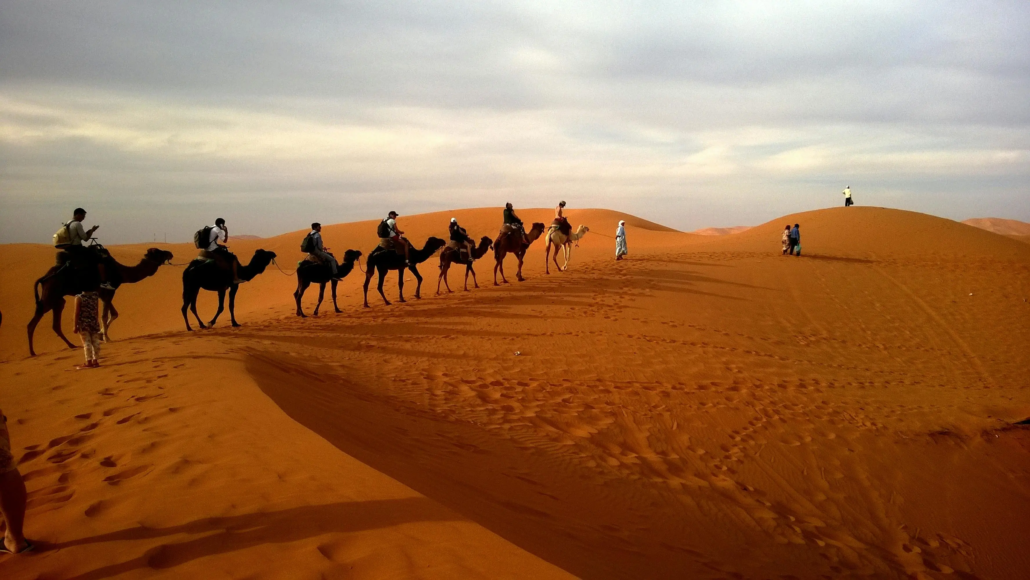
There’s a moment — right as your camel crests the last ridge and the great orange sea of the Sahara Desert Morocco opens up before you — when your phone feels completely irrelevant. That moment is why people fly thousands of miles. And once you’ve lived it, no beach holiday ever quite measures up again.
Morocco’s slice of the Sahara is not just one destination — it’s two entirely different worlds sitting 600 km apart, each with its own personality, access route, and crowd level. Whether you’re drawn to the photogenic red dunes of Erg Chebbi near Merzouga or the raw, wind-carved silence of Erg Chigaga near M’Hamid, this guide covers everything you need to know — from timing and transport to what it actually feels like to sleep under a sky so thick with stars you’d swear someone spilled milk across it.
The Best Time to Visit the Sahara Desert Morocco (Hint: Not July)
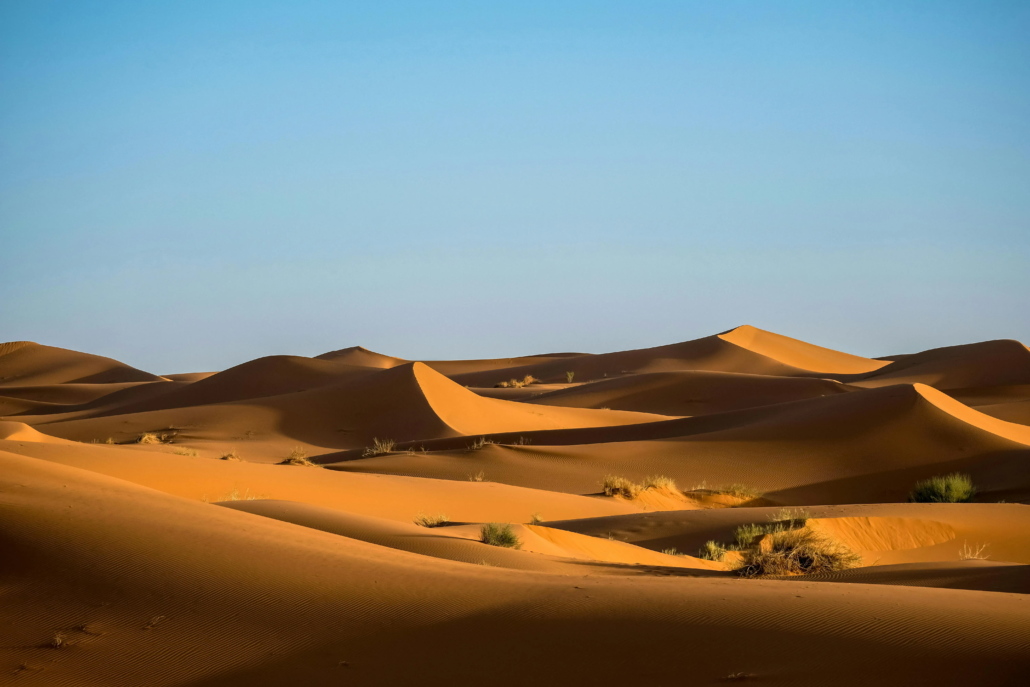
Let’s be blunt: visiting the Moroccan Sahara in midsummer is a punishing experience. Temperatures regularly hit 48°C (118°F) in July and August — hot enough to make a pizza oven feel refreshing. The desert is spectacular, but you won’t be in any condition to enjoy it.
The sweet spots are October through April, when days are warm and golden (22–28°C), nights dip to a crisp and stargazable 5–10°C, and the dunes cast their most dramatic long shadows at sunrise and sunset.
| Season | Temperatures | Verdict |
|---|---|---|
| October – November | 25–32°C days / 10–15°C nights | Perfect. Quieter crowds, warm sand. |
| December – February | 15–22°C days / 2–8°C nights | Excellent. Dramatic skies — pack layers. |
| March – April | 22–30°C days / 10–16°C nights | Perfect. Post-rain dunes, crisp mornings. |
| May – June | 35–42°C days / 18–24°C nights | Manageable, but getting spicy. |
| July – September | 43–50°C days / 25–30°C nights | Unless you enjoy feeling like a tagine. |
Should You Go at Full Moon or New Moon?
Here’s the insider secret most travel blogs skip: new moon nights are extraordinary for stargazing, while full moon nights turn the dunes silver and allow you to hike at midnight without a torch. Both are magical for entirely different reasons. If you can swing it, plan a 3-night stay that straddles both.
💡 Local Secret: Camp staff at Ghazala Camp in Erg Chigaga can orient your tent opening toward the precise angle where the Milky Way arcs from late autumn through early spring. Ask for it when you book. You’re welcome.
Erg Chebbi vs. Erg Chigaga: Which Part of the Sahara Desert Morocco Is Right for You?
This is the question Morocco desert travelers argue about over mint tea — and both sides have a point. Choosing between these two ergs is essentially choosing between accessible awe and remote wonder.
Erg Chebbi (Merzouga) — The Classic, the Crowd-Pleaser
Erg Chebbi’s rust-red dunes, some rising over 150 metres, are the ones that grace every Morocco travel poster. Merzouga sits right at the dune’s edge, meaning you can be on a camel within 30 minutes of checking in. It’s also considerably easier to reach — just 4 hours from Fez and well-served by shared taxis and bus routes.
The trade-off? You’ll share the experience with a lot of other people, especially at sunset. If solitude matters to you, read our full Erg Chebbi vs Erg Chigaga comparison to find your perfect match.
Erg Chigaga — The Sahara’s Best-Kept Secret
Erg Chigaga requires real commitment to reach — a 2-hour 4×4 ride through hammada (rocky desert) from M’Hamid — but the reward is disproportionately spectacular. This is the largest erg in Morocco, stretching 40 km and reaching dunes of 300 metres. On a weekday morning in November, you might genuinely be the only person visible on the entire horizon.
“Erg Chigaga is what the Sahara looks like before Instagram got to it — wild, infinite, and completely indifferent to your schedule.” — A Ghazala Camp Guest, returning for their 3rd visit
How to Get to the Sahara Desert Morocco Without Losing Your Mind
Transport is where many first-time visitors overcomplicate things. Here’s the honest breakdown:
- From Marrakech to Erg Chigaga: The most scenic route is a 2-day drive via the Draa Valley and Zagora — easily arranged as part of a guided desert tour from Marrakech that includes the Dades Gorge and Aït Benhaddou along the way.
- From Ouarzazate: About 5 hours to M’Hamid by road, then the 4×4 stretch into Erg Chigaga. Check desert tours departing from Ouarzazate for ready-made options.
- To Merzouga/Erg Chebbi: CTM buses connect Marrakech and Fez to Rissani (45 mins from Merzouga). Grand taxis handle the final leg. Budget-friendly and reliable.
- Flying: Errachidia airport serves the Merzouga region with connections to Casablanca. There’s no commercial airport near Erg Chigaga — which is, honestly, part of its charm.
🐪 Pro Tip: Renting a car? Go for a diesel 4×4 for the Chigaga route. Standard vehicles get stuck in soft sand, and the last thing you want is to become a cautionary tale 20 km from anywhere.
Where to Stay: Luxury Desert Camps in the Sahara Desert Morocco
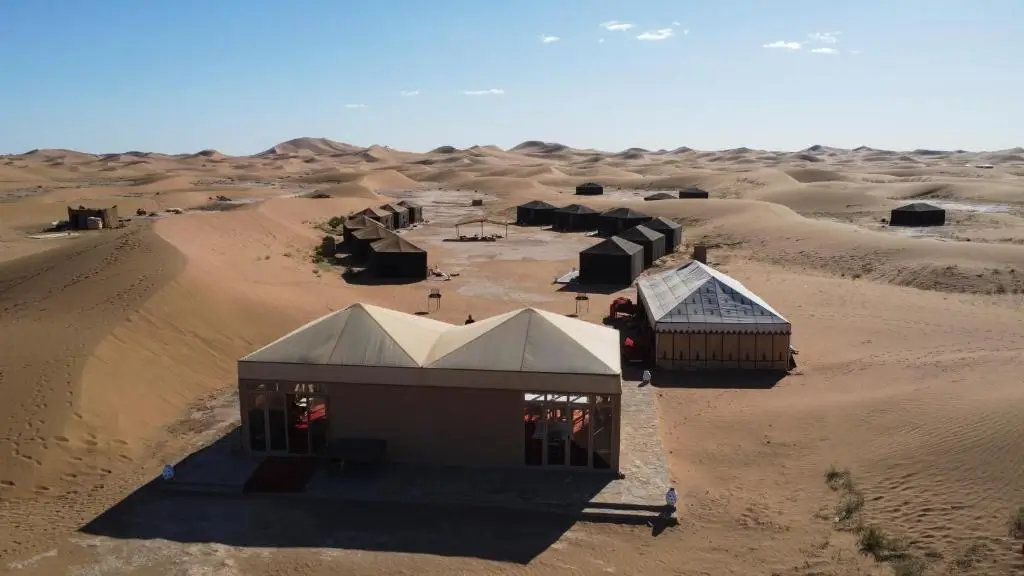
There is a world of difference between a budget bivouac and a properly equipped luxury desert camp. And no, sleeping under canvas in the Sahara does not have to mean compromising on comfort.
Ghazala Camp — Erg Chigaga’s Premier Desert Experience
Ghazala Camp sits deep inside Erg Chigaga, far enough from any road noise to make total silence feel like a physical presence. The tented suites come with real beds (actual beds with quality linen — not sleeping mats), en-suite private bathrooms, and Berber-decorated interiors that feel more boutique hotel than campsite.
Evening dinner is a proper affair: slow-cooked lamb tagine, harira soup, fresh Moroccan salads, and Saharan herb tea — all eaten with the dunes glowing in firelight. For desert activities in Erg Chigaga, the team organises camel treks at sunrise, sandboard sessions at sunset, guided dune walks, and Gnaoua music nights around the fire.
“The silence here is the loudest thing I’ve ever heard. That’s not a contradiction — you’ll understand the moment you’re standing on the dunes at 2am.” — Rachel, solo traveller from Australia
Top Desert Activities That Go Way Beyond the Camel Selfie
Yes, the camel ride is mandatory. But the Moroccan Sahara has far more to offer than your obligatory hump-mounted photo opportunity.
- Sunrise Dune Climb — Set your alarm for 5:30am. Climb the highest dune near camp and watch the shadow line pull back across the sand in real time. Twenty minutes. Zero athletic ability required.
- Sandboarding — Exactly what it sounds like. Surprisingly fast. Slightly undignified. 100% worth it.
- Stargazing Sessions — Erg Chigaga has essentially zero light pollution. You’ll see the Milky Way, Jupiter’s moons, and probably question several life choices in the best possible way.
- 4×4 Desert Safari — Head into the hammada between the ergs to discover fossils, ancient caravan routes, and nomadic Berber settlements.
- Berber Music Night — Every evening at Ghazala Camp ends around a fire with local musicians playing guedra and Gnaoua rhythms. It’s the kind of thing you’ll be describing to people for the next decade.
🍵 Cultural Note: When offered mint tea in the desert, always accept — even your fourth cup. Refusing is a mild social faux pas in Berber culture. Also: it’s delicious and keeps you warm at night, so there’s truly no reason not to.
Food, Costs & Practical Realities of Visiting the Sahara Desert Morocco
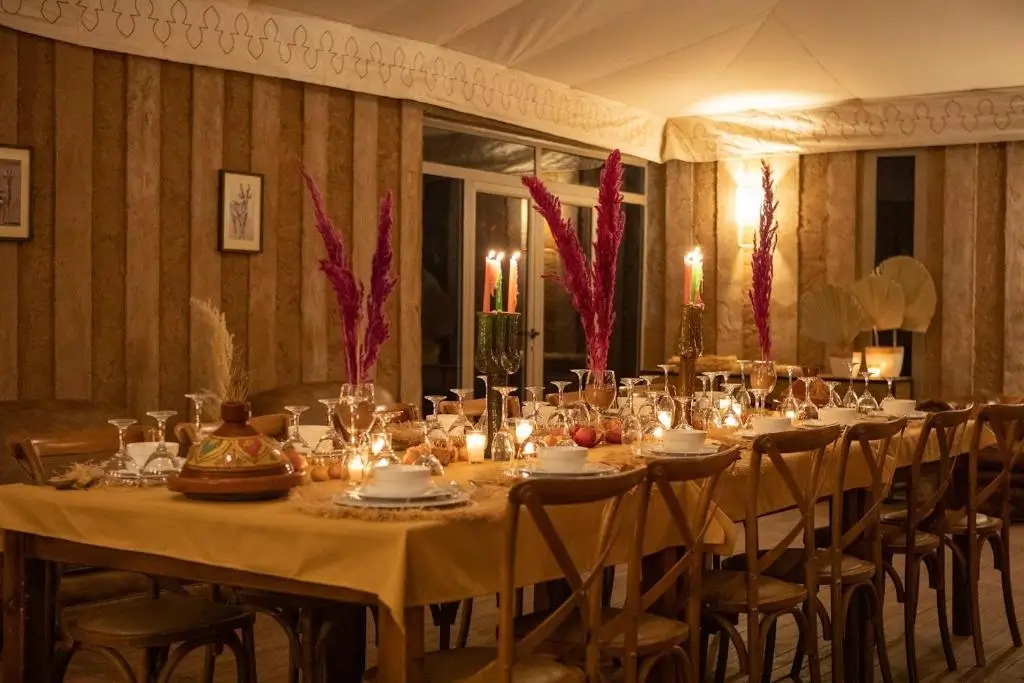
Morocco’s desert cuisine is quietly extraordinary. Tagines slow-cooked over charcoal are the backbone of every camp dinner, alongside fluffy Friday couscous, merguez sausages grilled over open flames, and honeyed bastilla pastry for breakfast.
Expect to pay €90–€180 per person per night at a well-equipped luxury camp, which typically includes dinner, breakfast, camel ride, and a fire session. Budget bivouacs run €25–€40 per night. Shared transport from Marrakech to Erg Chigaga costs approximately €15–€25 each way; a private guided tour starts around €180–€250 per day.
Solo travellers — particularly solo women — will find Morocco’s desert region genuinely safe and welcoming. Book transport through your accommodation rather than accepting offers at bus stations. The Moroccan National Tourist Office maintains updated official safety guidance if you want extra reassurance.
“I was nervous about solo travel in Morocco, but Erg Chigaga was honestly where I’ve felt most looked after as a solo woman traveller — the camp team became friends by day two.” — Priya, solo traveller from London
FAQ: Sahara Desert Morocco — Your Questions, Answered Honestly
How many days do I actually need in the Sahara Desert Morocco? Two nights is the realistic minimum for Erg Chigaga (one feels rushed given the distance), while one night works for Erg Chebbi. Three nights lets you explore at your own pace, catch both sunrise and sunset properly, and truly decompress. Most guests leave wishing they’d stayed longer.
Is the Moroccan Sahara safe for solo travellers and families? Yes. Morocco’s southern desert region is considered very safe. Petty tourist-town scams exist but are easily avoided by booking transport through your accommodation and ignoring unsolicited approaches. Families with young children do the Sahara regularly — just pack layers, sunblock, and patience for long drives.
What is the difference between Erg Chebbi and Erg Chigaga? Erg Chebbi (Merzouga) is accessible, photogenic, and has more tourist infrastructure — ideal if you’re short on time. Erg Chigaga is larger, more remote, and sees far fewer visitors — ideal if you want the Sahara to feel like a genuine discovery. Both are magnificent.
What should I pack for a Sahara Desert Morocco trip? Beyond your usual travel kit: a lightweight chèche scarf (essential against sun, wind, and sand), layers for cold nights (fleece in spring/autumn; proper jacket in winter), a headlamp for dune-top stargazing, SPF 50+ sunscreen, and cash in Moroccan dirhams — card machines simply don’t exist this deep in the desert.
Ready? The Dunes Aren’t Getting Any Younger
The Sahara Desert Morocco is one of the rare places on Earth where reality genuinely exceeds expectation. The light is better than the photos. The silence is deeper than you imagined. The hospitality — that you’ll have to experience for yourself.
Whether the crowd-friendly grandeur of Erg Chebbi is your speed, or the vast solitude of Erg Chigaga calls louder, stop scrolling and start planning. The sand shifts a little every day — but the magic stays constant.
Book your night at Ghazala Camp →
Keep reading:


Leave a Reply
Want to join the discussion?Feel free to contribute!